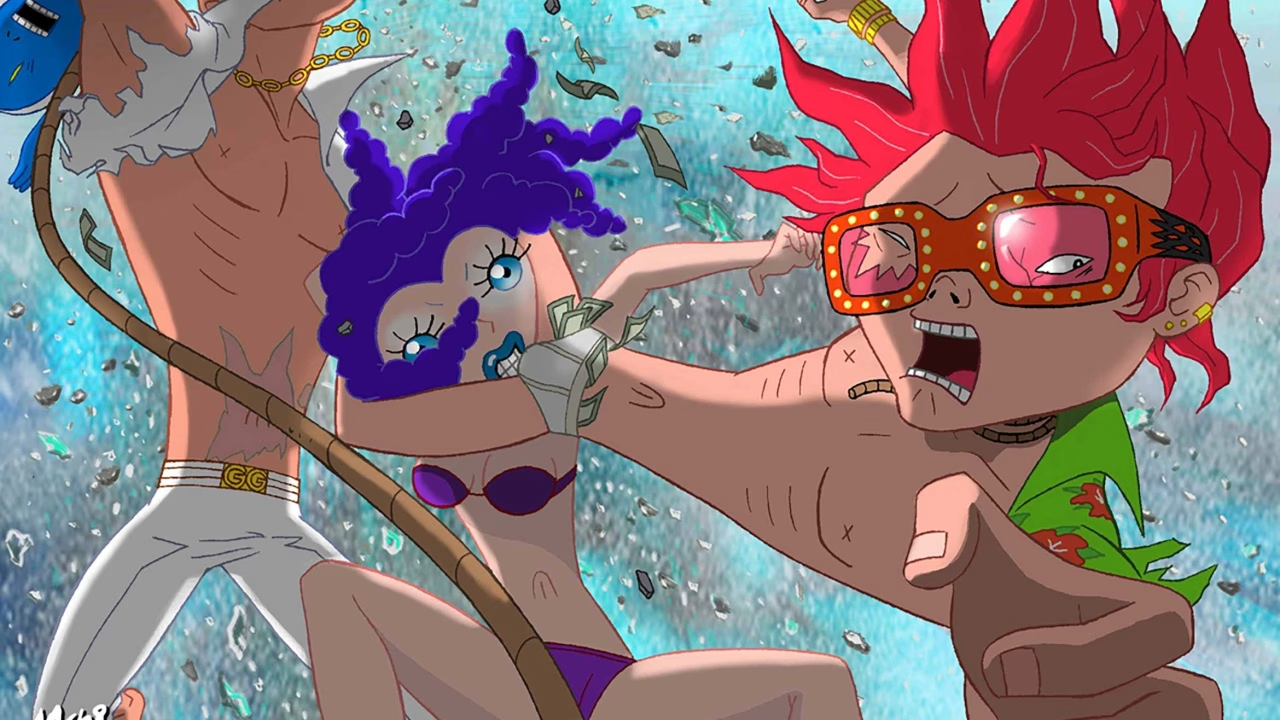
Twenty years after Aachi & Ssipak first reached South Korean theaters, director Joe Bum-jin is getting another chance to introduce his wildly unconventional animated feature to international audiences. The 2006 adult science fiction action comedy, which struggled commercially in its home country, is returning through Darkroom with a new 2K presentation as part of its 20th-anniversary revival. The Korean Film Council records 100,793 admissions for the original theatrical run, underscoring just how difficult its initial release proved to be.
Set in a dystopian future where human waste has become the city’s primary energy source, Aachi & Ssipak follows two street criminals caught between a government-controlled society, an addicted mutant gang and a ruthless cybernetic enforcer. Darkroom currently lists the film among its animation offerings, giving international viewers another opportunity to discover the unusual Korean production.
In an exclusive written interview provided to OtakuKart, Joe Bum-jin reflected on the eight-year production, the film’s original Korean version, its controversial English release and why its central satire may feel unexpectedly relevant in 2026.
Joe Bum-jin Reflects on Aachi & Ssipak’s Difficult Road to Release
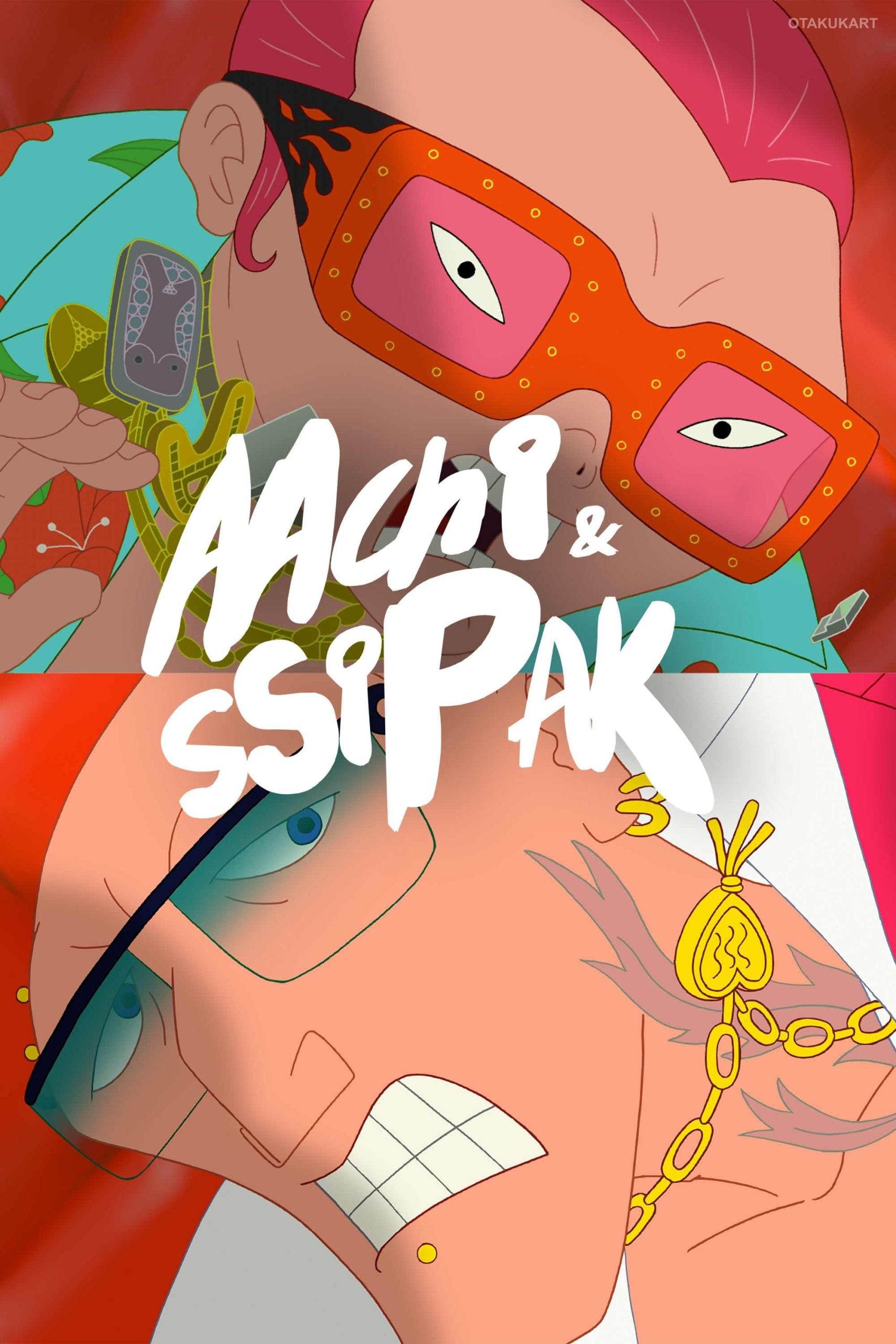
OtakuKart: The film sold only about 107,000 tickets in Korea and was not considered successful at the time. Twenty years later it is coming back in 2K for an international audience. When did you realize it had found a second life outside Korea, and how do you feel about it now?
Joe Bum-jin: The film drew about 100,000 admissions in Korea in 2006. To be honest, it was almost a disaster for me. As a result, I went through a very long and dark tunnel personally for nearly the next ten years.
What hurt most was that a film we had spent eight years making barely lasted a week in theaters. I felt like a cicada. You struggle underground for years, finally make it out into the world, and then die before you’ve even had a few days to make some noise. We spent eight years making the film, and it had less than a week to meet its audience.
Looking back, though, I sometimes think that trying to make a feature animation like this commercially successful in Korea at the time was a bit like throwing an egg at a rock. Korea was much more conservative then and less accustomed to cultural diversity. Theaters were also very reluctant to give many screens to a Korean animated feature, and our distributor didn’t have enough influence to secure particularly good release conditions.
And then, after all that, we somehow managed to release the film right in the middle of the 2006 World Cup. Korea had unexpectedly made it all the way to the semifinals in 2002, so by 2006 even people who knew almost nothing about soccer seemed to be thinking, “Maybe we’ll win it this time?” The whole country was obsessed with soccer, and there we were releasing an animated movie. Looking back, it feels like every possible bad condition came together beautifully at exactly the same time.
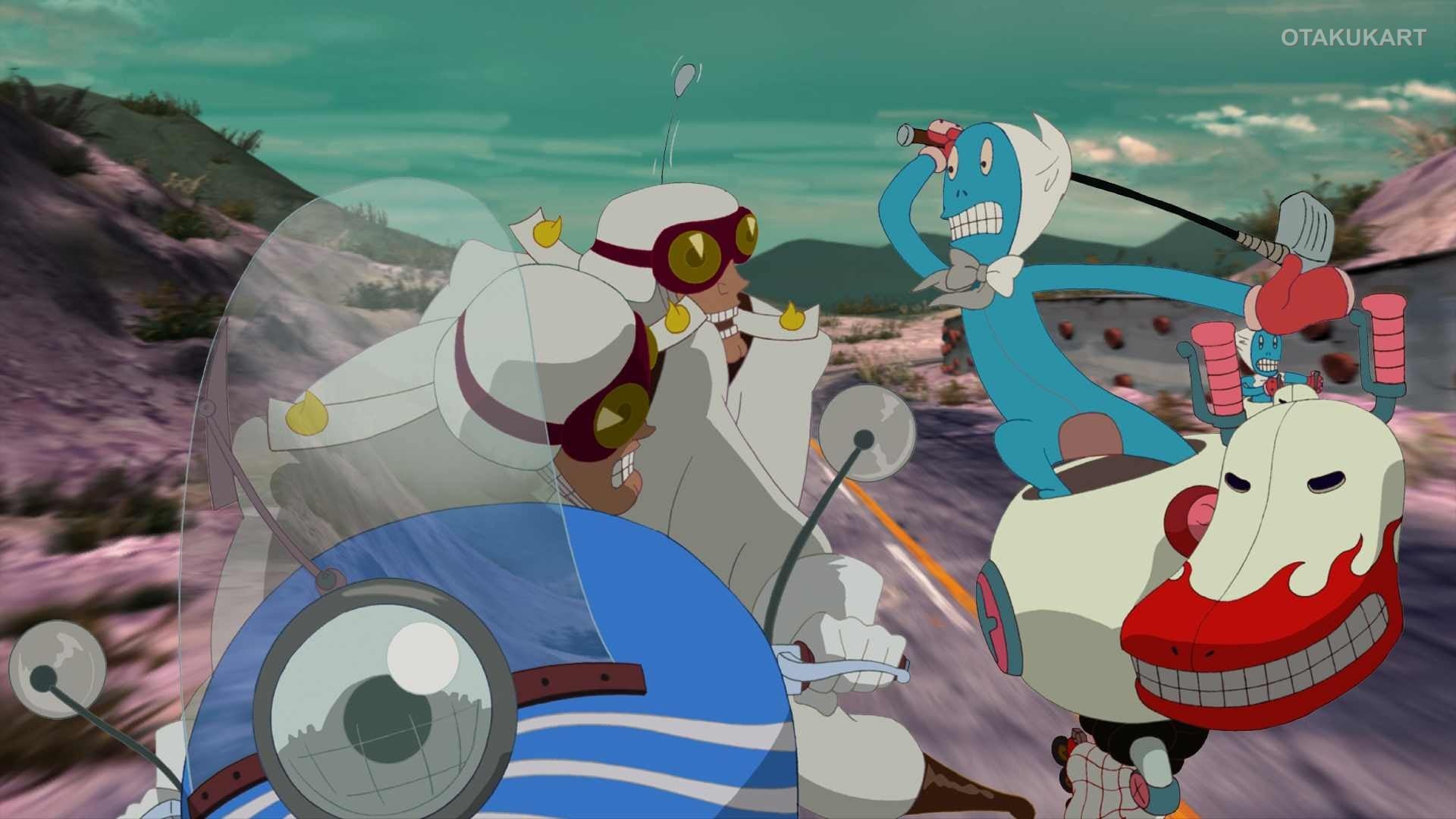
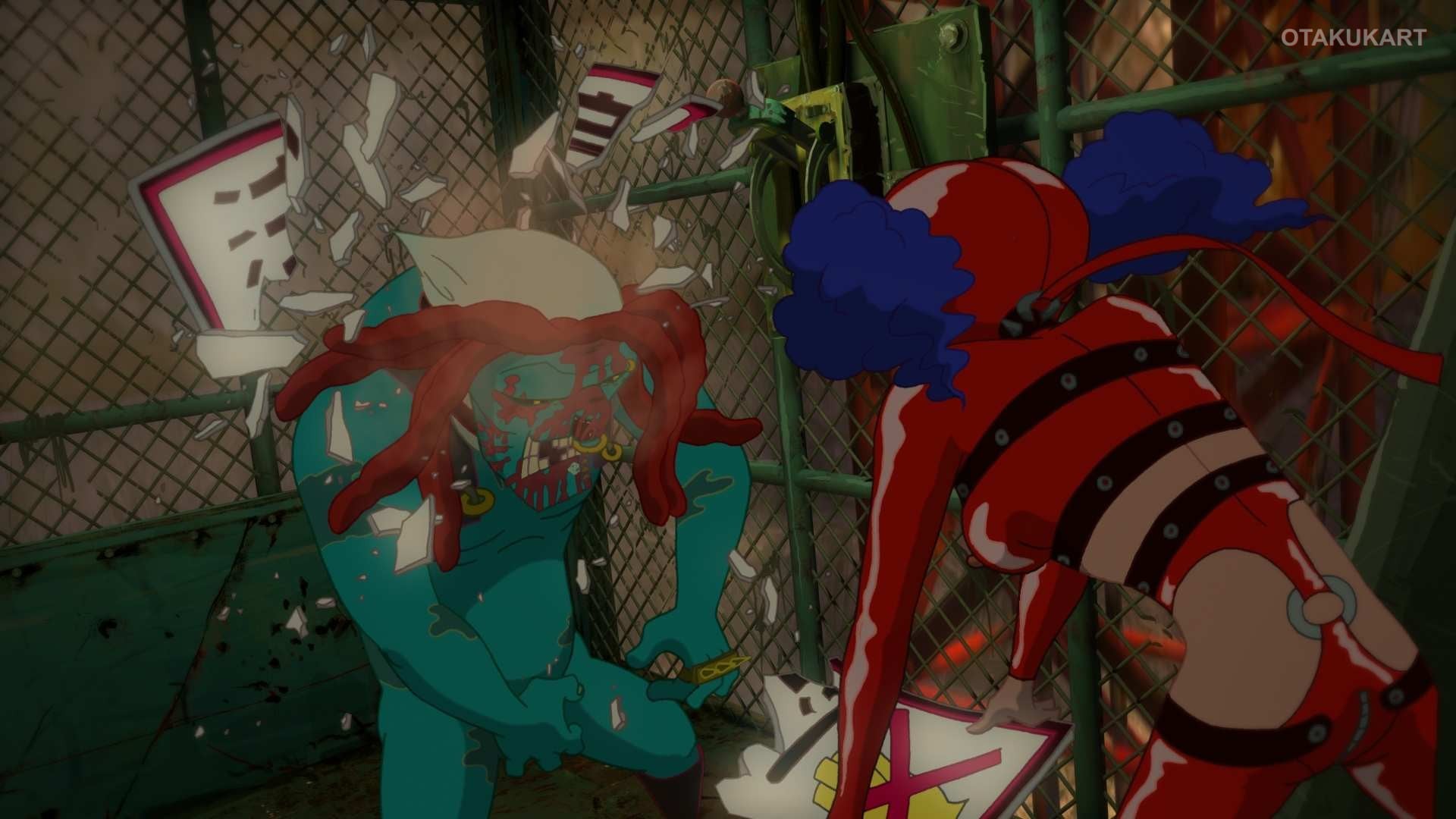
Then again, to be fair, Aachi & Ssipak was never exactly a mainstream movie. I’m still not sure I would say the film has already found a “second life” outside Korea. But over the years, I knew there was a small group of people overseas who remembered it and genuinely liked it.
I always thought that if the right time came, I would like to give the film a proper release again. Now twenty years have passed, a new generation has come along, and this feels like a pretty good time to try.
Twenty years ago, I think the film’s aggressiveness and its particular kind of spicy flavor were difficult for a mainstream audience to accept. Today, audiences are much more familiar with diverse and daring styles, and global interest in Korean culture is completely different from what it was back then.
So I’m curious to see whether the film will be received differently this time. I hope people can enjoy it as a kind of “K-spicy animation, fermented for 20 years.”
OtakuKart: The 2014 English version rewrote the dialogue, renamed Hard as Juicybars and the Bojagi Gang as the Diaper Gang, cut four minutes and replaced the score entirely. The new remaster restores the original Korean audio with subtitles. How involved were you in that English version, and which one do you consider the real film?
Joe Bum-jin: As I understand it, changing “Hard” to “Juicybars” and “Bojagi Gang” to “Diaper Gang” was probably the translator’s attempt at the time to make those terms easier for English-speaking audiences to understand. “Yippeuni” was also translated as “Beautiful.”
For the new English subtitles, we changed all of those names back to their originals: “Hard,” “Bojagi Gang,” and “Yippeuni.” The way the world receives Korean culture today is completely different from twenty years ago. K-culture is now familiar to audiences around the world, so I felt there was no reason to turn Korean names into English ones. It made more sense to keep the original names.
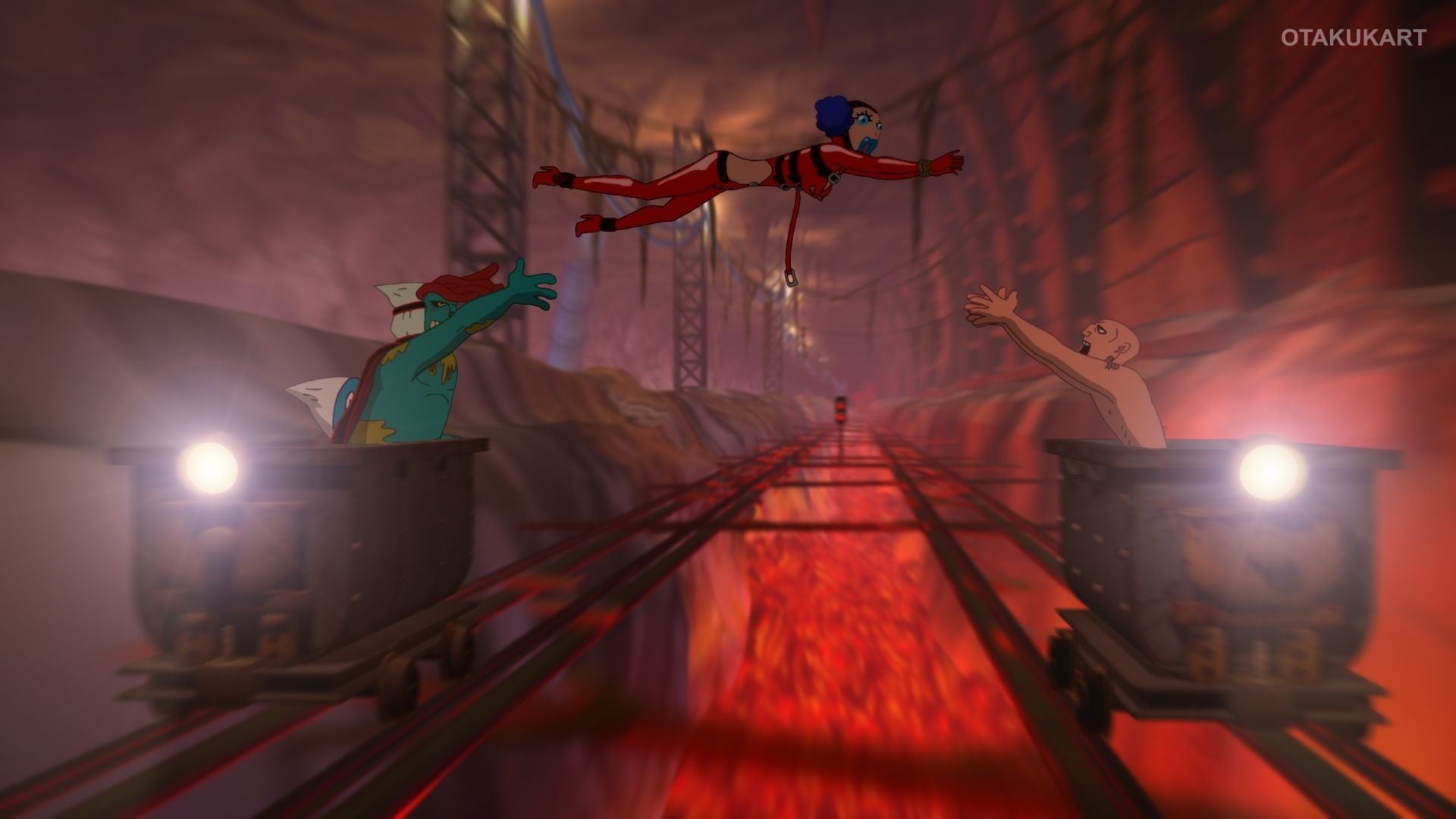
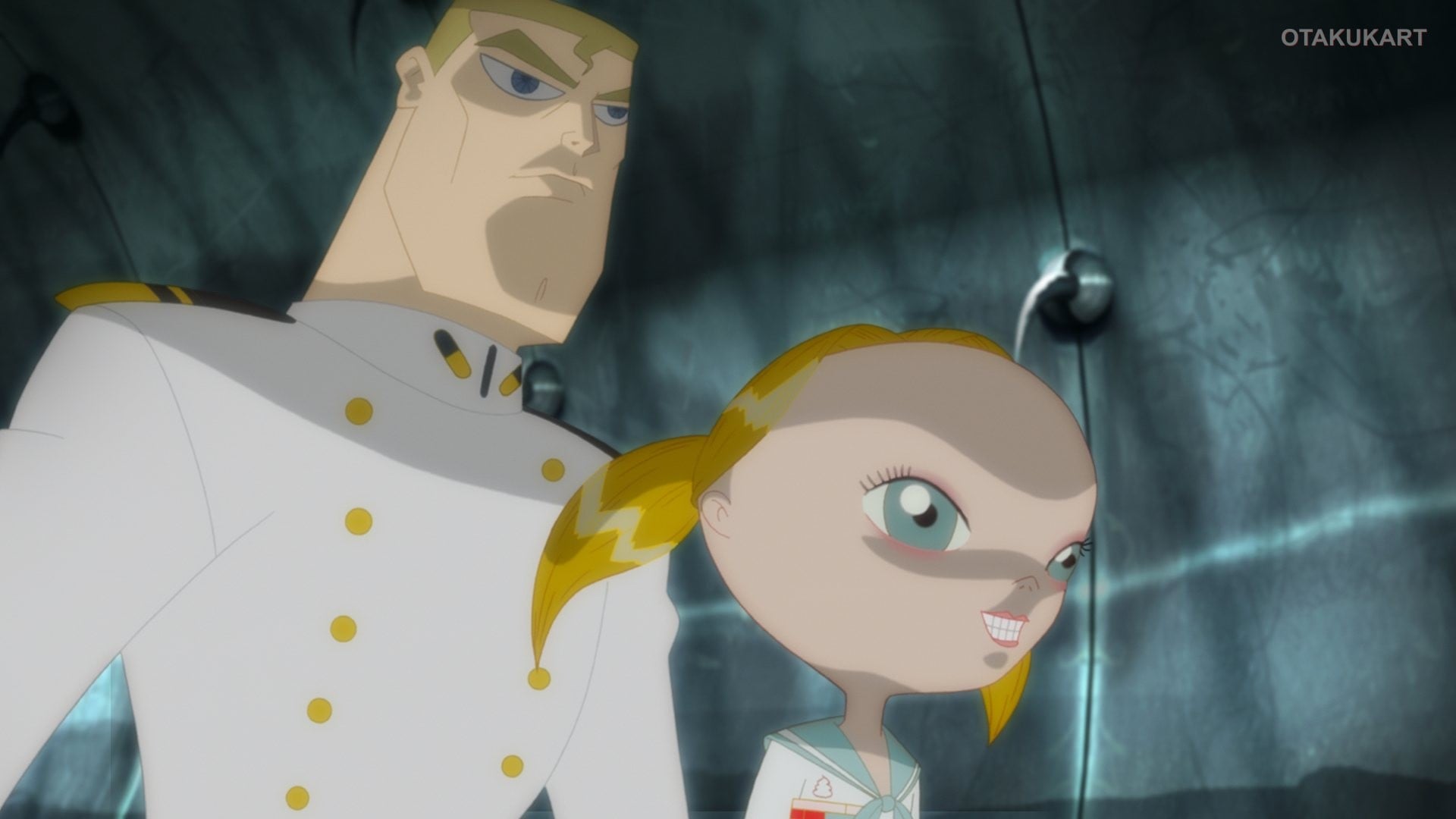
Also, the Korean audio in this version was not “restored,” because the Korean dialogue and voices were never changed in the first place. The sound in this version was reworked for the film’s 2020 Korean re-release. When the film originally opened in 2006, there were complaints that some of the dialogue was difficult to hear, so we rebalanced the different sound layers, including the dialogue and music. So I would describe this not as a restoration, but as a remastered version of the original film, with particular attention paid to the sound. And for me, this is the original version.
As for how involved I was with the 2014 English version: I wasn’t involved at all. In fact, I didn’t even know that version existed until much later.
To be honest, this question brings back a little of the anger I felt at the time. It was very difficult to understand how my film could have been re-edited and its music replaced without my knowledge. As far as I understand, Mondo Media made an agreement with a party that did not have the legitimate rights to do so, and that is how that strange version came into existence.
So as the director, I do not consider that English version an official version of my film at all.
To exaggerate a little, it felt like someone had kidnapped my child, and then years later I happened to find the child again—only to discover that they had been transformed into something strange and put into a freak show. You would probably think, “What the hell did you do to my child?”
Of course, I’m not going to stay angry about something that happened more than ten years ago. At this point, I consider it a matter of karma. Eventually, everyone gets their share of what they’ve done. I can smile about it now, be generous, and move on.
The Original Ending and Possibility of a Sequel
OtakuKart: The original Korean ending showed the doctor surviving and starting work on a new cyborg. That was removed for the earlier English release. What was that original ending meant to do, and how do you feel about overseas audiences finally seeing it?
Joe Bum-jin: Oh, was that scene removed from the English version? When I first discovered that version, I skipped through a few scenes, but for the reasons I mentioned earlier, I decided that watching any more of it probably wasn’t good for my mental health. So I never watched it again. Whether that particular scene was removed or not isn’t very important to me. That version has nothing to do with me anyway.
Back to the original film: the final scene, where the Doctor survives and begins creating a new cyborg, was intended to suggest the possibility of a sequel. I think most directors have some idea in the back of their minds about where the story might go next. I was no different.
I wanted that scene to give a small hint that “this story isn’t completely over.” Maybe part of me was also hoping that someday I really would get to make a sequel.
Twenty years later, though, even if I do make a sequel someday, I don’t think the new cyborg the Doctor was working on back then will appear in it. I’ve changed over twenty years, and my ideas about what the next story should be have changed a lot as well.
And as for what that new cyborg actually looks like, I won’t say because that would be a spoiler. If you’re curious, you’ll have to find out for yourself.
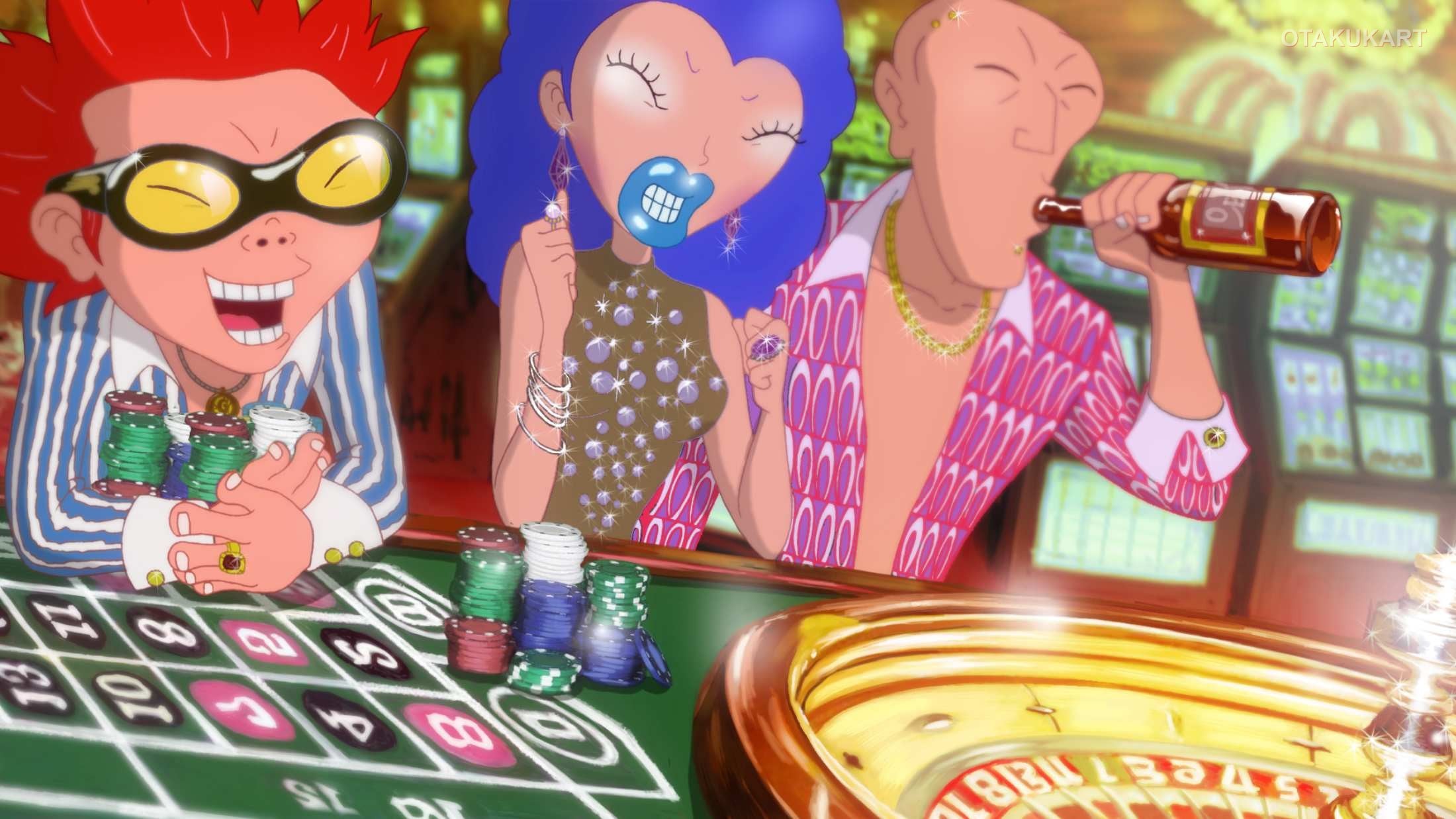
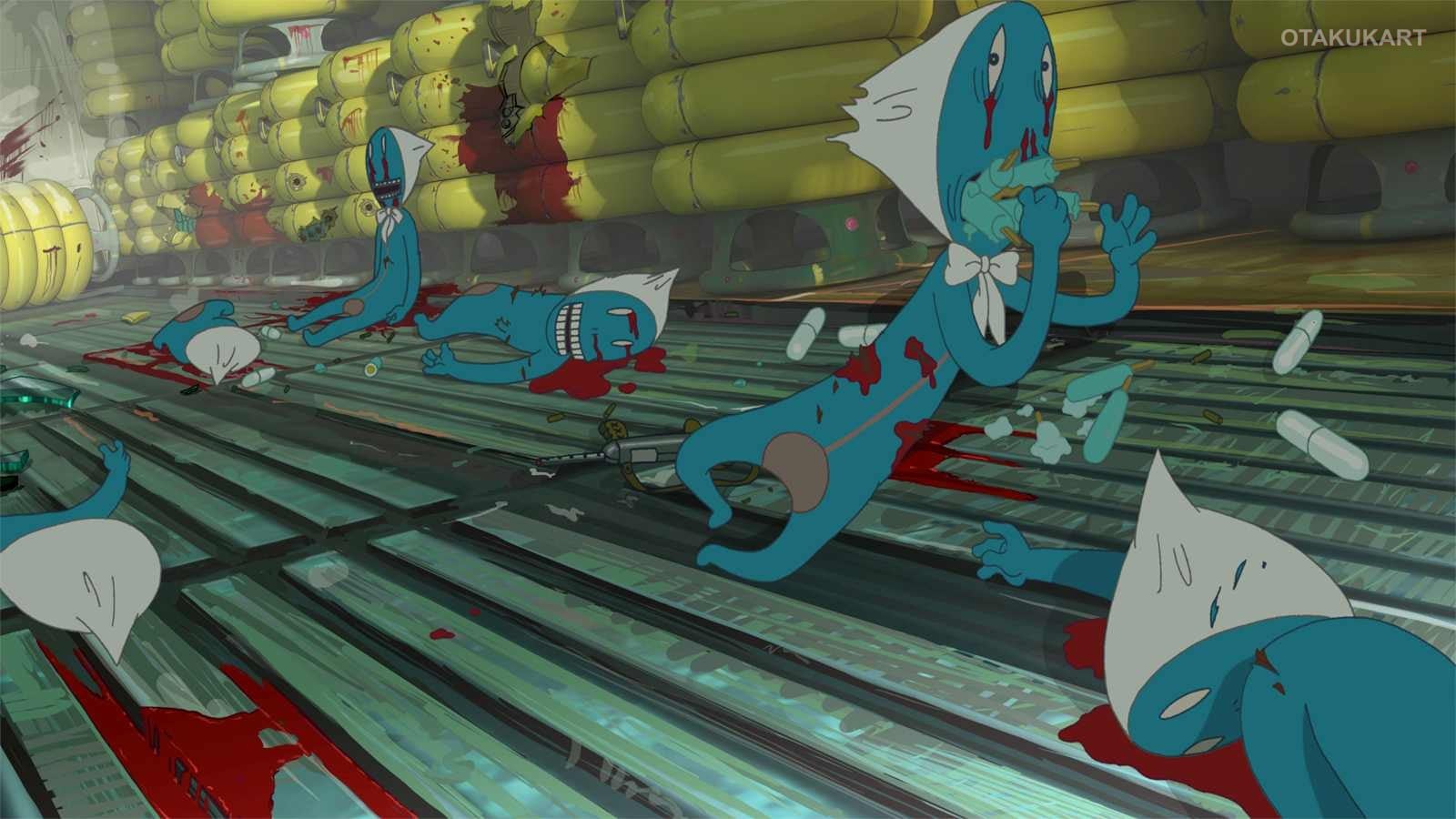
OtakuKart: Production stopped for almost a year when investors pulled out after Mari and Wonderful Days failed. What was the closest the film came to being abandoned completely, and what kept you on it for eight years?
Joe Bum-jin: At the time, feature-length animation was almost nonexistent in Korea. Even when more than a hundred Korean live-action features were being made each year, a Korean animated feature might appear only once every few years.
The biggest reasons were time and money. With a live-action film, investors can usually see a result within a year or two. A feature animation can take seven or eight years to make. From an investor’s point of view, that means having money tied up for a very long time, so naturally it was difficult to attract investment.
Korea also had very little infrastructure or experience in producing animated features at the time. I knew the directors of My Beautiful Girl, Mari and Wonderful Days quite well, and all of us were basically entering unknown territory. It was a little like trying to build a car while also building the highway it was supposed to drive on.
During the eight years we spent making Aachi & Ssipak, investment money stopped coming for a month or two, sometimes several months, on many occasions. At the worst point, we went nearly two years without receiving investment money. That was probably the moment when the film came closest to being abandoned completely.
Each time, we found money wherever we could or applied for government funding programs to keep going. Even then, the core staff barely stopped working.
At the same time, if we were going to make a feature film, we ultimately had to compete in the same market as Japanese animation and Disney, so we couldn’t simply give up on quality. And at some point, I looked around and realized we had already come too far. It was too late to turn back, so I suppose the only thing left to do was keep moving forward.
Looking back, it’s actually pretty funny. Koreans are famous for loving everything “ppalli-ppalli”—fast, fast—but somehow we spent eight years making one animated film. We weren’t fighting for national independence, but we were making the film with almost that level of seriousness. Looking back, I’m not sure it really needed to be quite that dramatic. If I could go back in time, I probably wouldn’t do anything this foolish again.
Why Aachi & Ssipak’s Satire Feels Different in 2026
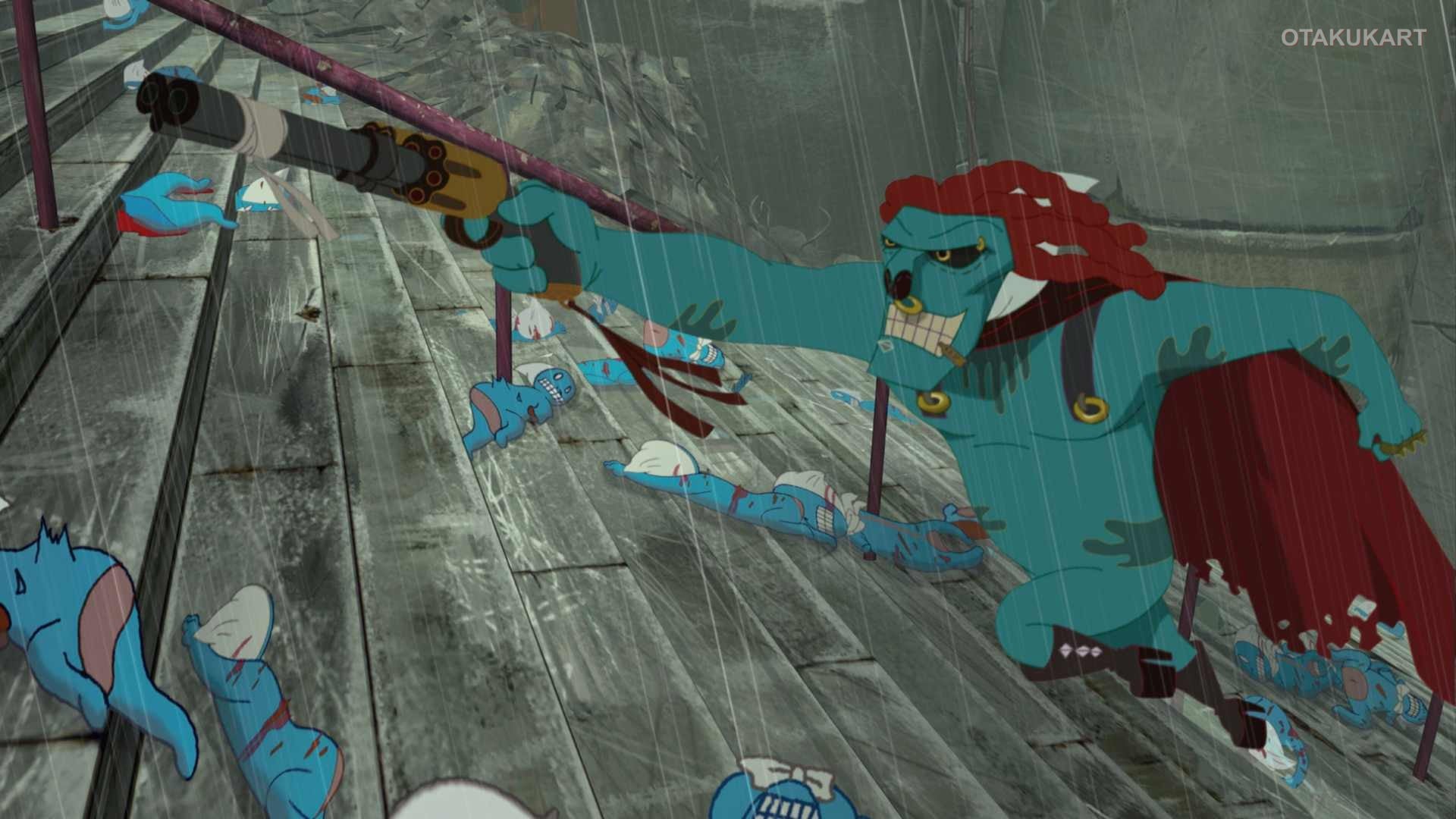
OtakuKart: The premise involves a government putting ID chips in citizens to monitor their output and paying them in something addictive as a reward. That reads very differently in 2026 than it did in 2006. Did you think of it as satire at the time, and does the way people react to it now surprise you?
Joe Bum-jin: Yes, absolutely. It was satire. But at the time, I wasn’t trying to predict the future or deliver some serious social message. I basically wanted to create an ironic world where normal values had been completely turned upside down.
Human waste is normally one of the most worthless things we produce. You simply get rid of it. But in this film, it becomes the most important product in society, and the government even monitors how much people defecate. In return, people receive something as trivial as an ice pop called “Hard”—and even that is addictive. The most worthless thing becomes the most valuable thing. That reversal of value was one of the central ironies of the film.
At the time, I thought it was a pretty absurd and exaggerated dystopian joke. But twenty years later, our behavior and information are constantly being recorded and analyzed, while we receive little rewards in return—points, “likes,” short videos, and so on. Of course, I’m not saying that the world today is the same as the world in the film. But it is interesting that a joke I once thought was extremely exaggerated doesn’t seem quite as exaggerated anymore.
So I understand why people today might see the premise as much more realistic. I don’t think I predicted the future particularly well. It feels more like the world has spent the last twenty years slowly walking toward Aachi & Ssipak. That’s kind of funny, but also not particularly comforting.
Shin Hae-chul’s Memorable Bojagi King Performance
OtakuKart: Shin Hae-chul as the Bojagi King is one of the most remembered performances in the film. What do you remember from recording with him, and how did that casting come together?
Joe Bum-jin: Of all the voice actors in the film, Shin Hae-chul’s performance is probably the one that has stayed with me the most.
I didn’t create the Bojagi King with Shin Hae-chul in mind. When we were preparing to record and thinking about who might fit the role, I happened to see him playing a cult leader in the TV series Hello, Francesca. Until then, I had mostly thought of him as a singer and radio host. But the moment I saw him in that role, I suddenly thought he would be perfect for the Bojagi King.
On top of that, Shin Hae-chul was already famously nicknamed “The Demon King.” And here was the Bojagi “King,” a character wearing platform shoes and constantly putting on airs. The more I thought about it, the more it felt like, “Isn’t this character basically Shin Hae-chul?” So we contacted him, and since he was already very interested in animation, he readily agreed to do it.
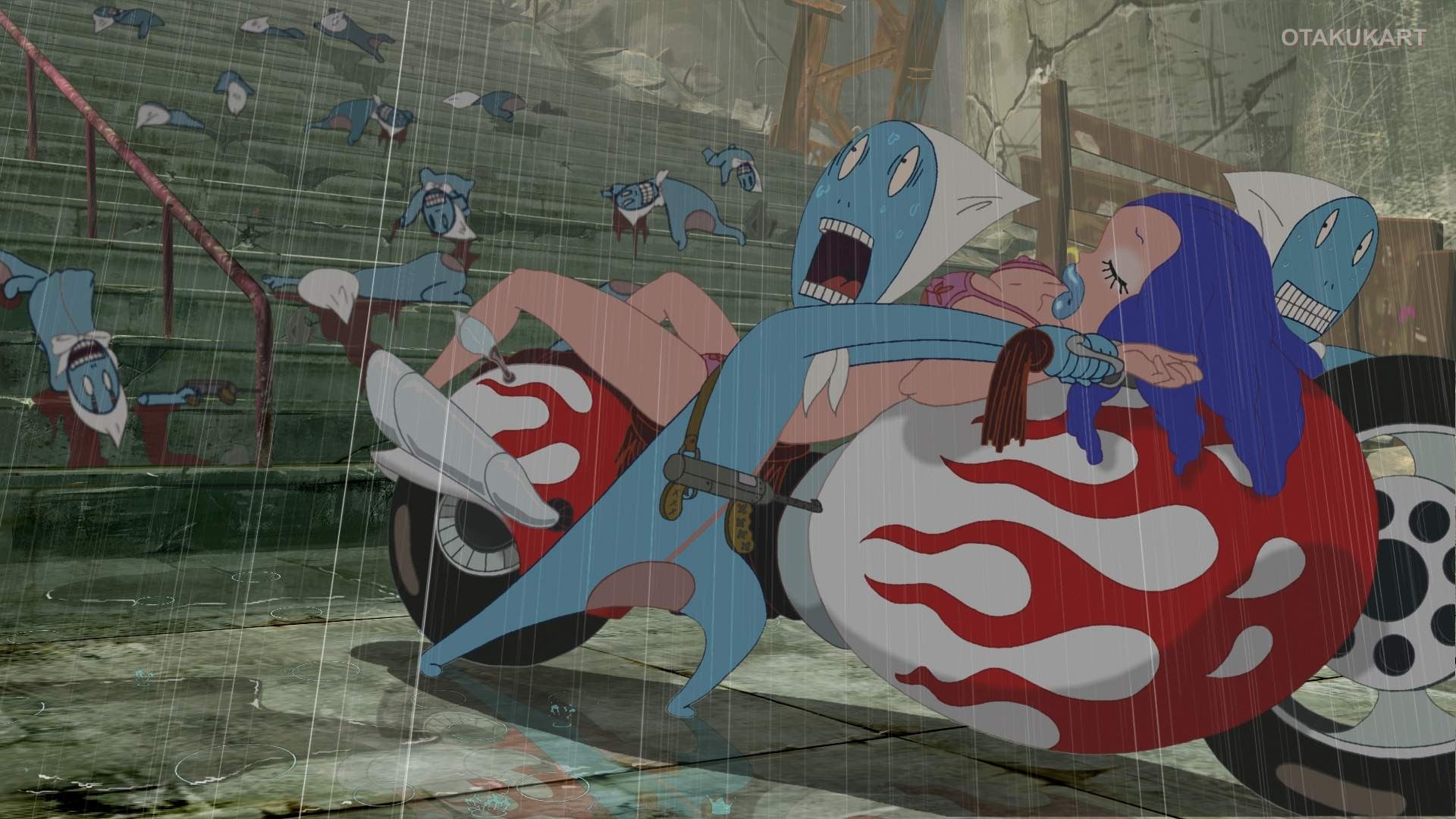
As I remember, we recorded three or four sessions. What impressed me most was that he didn’t simply show up to read the script. He had studied the film and the character very carefully, and during the sessions he came up with a lot of improvisations using his own songs and lyrics. Several of those improvisations are still in the film, and there are Korean fans who especially love those moments.
Watching him improvise, you could immediately tell how quick and smart he was. He would throw out a line and somehow take it in a completely unexpected but perfectly accurate direction. I remember the recording staff and I laughing a lot.
At the time, Shin Hae-chul was known not only as a famous musician but also as someone who spoke very openly about social issues. He had a free-spirited, rebellious and intellectual public image, and I think that fit the Bojagi King perfectly.
And despite how famous he was, when we actually worked together, he was remarkably serious and professional about the recording. That remains a very good memory for me.
That made his sudden death later all the more tragic. It was a huge shock to many Koreans, myself included. When the film was re-released in Korea in 2020, we added a message at the beginning in memory of Shin Hae-chul. For me, it has become very difficult to think of the Bojagi King without thinking of him.
Aachi & Ssipak is returning to international audiences through Darkroom with its 2K presentation, marking two decades since Joe Bum-jin’s unconventional animated feature first reached Korean theaters. The film is presented in Korean with English subtitles, allowing audiences to experience the original terminology and presentation that Bum-jin considers the authentic version of the movie.
Interview source: The complete written interview with director Joe Bum-jin was provided to OtakuKart by the film’s publicity team. The supplied interview confirms that the director’s name should be spelled Joe Bum-jin.