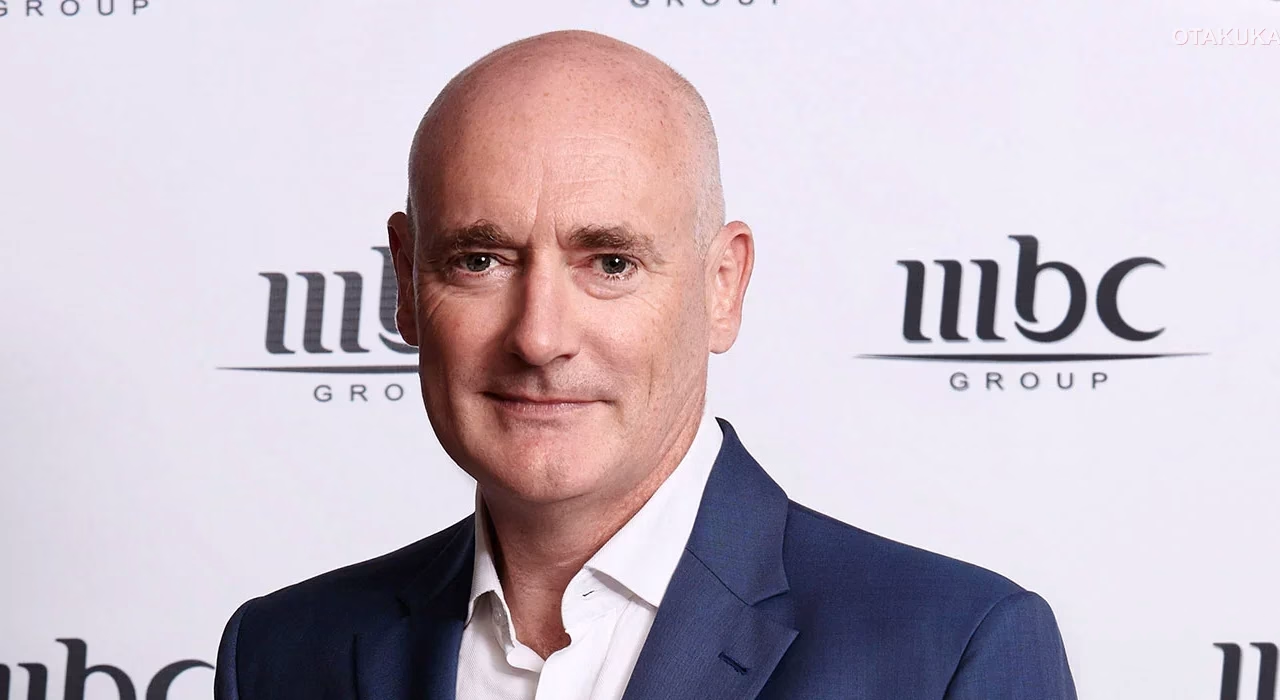
Traditional broadcasters in Central and Eastern Europe are facing a growing challenge from global streaming platforms, and industry leaders are now sounding the alarm. Central European Media Enterprises CEO Sam Barnett has warned that companies in the region must act quickly or risk losing audiences to Netflix and YouTube. His comments, delivered during a keynote session at NEM in Dubrovnik, highlight how the streaming boom is beginning to reshape even markets that were once slower to adopt digital platforms.
According to Deadline, Barnett made it clear that the competitive terrain has shifted dramatically.
“We are now ultimately playing against the American streamers,”
he said, emphasizing that local broadcasters are no longer just competing with each other but with global tech giants that dominate digital consumption.
Why Global Streamers Are a Growing Threat
Barnett pointed out that platforms like Netflix and YouTube are not only attracting viewers but also redirecting advertising revenue away from local markets. This shift is particularly concerning for smaller economies in Central and Eastern Europe, where media companies rely heavily on regional audiences and ad spending.
He explained that while the region has historically been slower to transition fully to digital, that delay is now becoming a double-edged sword.
“How we defend against the YouTubes, who are sucking up the advertising dollars and funnelling out to the U.S., and the streamers, who will come in and dominate the scene,”
Barnett said, describing the urgency of the situation.
At the same time, he acknowledged that the region’s fragmented structure could offer some protection. With multiple languages and diverse cultural preferences, Central and Eastern Europe presents challenges for global platforms trying to scale quickly. Barnett noted that these differences can act as barriers to entry, giving local broadcasters a window of opportunity to strengthen their position.

CME’s Strategy to Compete in the Streaming Era
To address these challenges, CME has outlined a clear strategy focused on four key areas: premium content, protecting traditional linear television, accelerating digital growth, and building strong local brands. Barnett stressed that digital expansion is no longer optional, warning that failure to adapt could have serious consequences.
“If we don’t do the digital piece, we will become irrelevant within a few years,”
he said. The statement reflects a broader industry shift, where traditional broadcasters are being forced to rethink their business models in order to survive in a streaming-first environment.
Barnett also highlighted that while companies like Netflix invest heavily in content globally, their spending in Central and Eastern Europe remains relatively limited.
“They’re not spending $18B in this part of the world,”
he noted, suggesting that local players still have room to compete by focusing on region-specific content that resonates with audiences.
Local Content as a Competitive Advantage
One of the key themes of Barnett’s remarks was the importance of investing in high-quality local programming. He argued that audiences will continue to value culturally relevant content, even as global platforms expand their reach. By doubling down on regional storytelling, broadcasters can maintain a strong connection with viewers.
Barnett described this approach as building a “local content utility,” where viewers turn to domestic platforms for stories that reflect their own cultures and experiences. He also suggested that technological tools, including artificial intelligence, could help improve production quality while keeping costs manageable.
His broader vision involves coexistence rather than direct replacement. While acknowledging that consumers will likely maintain subscriptions to global platforms, he believes there is still space for local services to thrive alongside them.