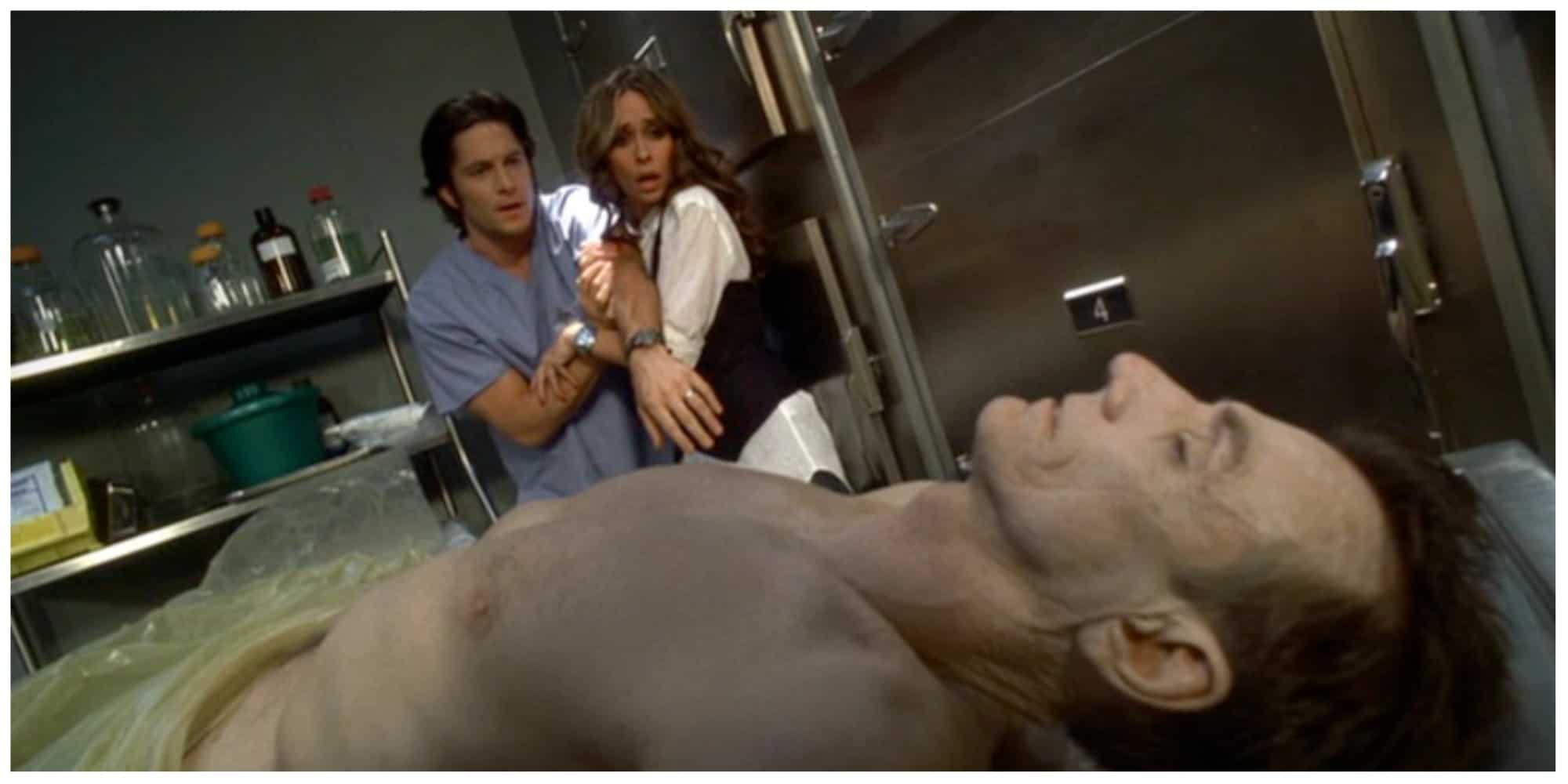
Among all of Buffy the Vampire Slayer’s terrifying villains, Der Kindestod stands apart as uniquely horrifying. Introduced in Season 2, episode 18, “Killed by Death,” this demon terrorizes a hospital ward, preying solely on sick children.
Its name, meaning “child death” in German, directly points to its cruel purpose: to strike down defenseless patients by pinning them down and slowly siphoning off their life energy.
Unlike many of Buffy’s other foes, Der Kindestod is invisible to all but the gravely ill children, making its menace silent and isolating its victims fight a battle seen by none but themselves and the monster itself.
Buffy herself encounters the creature when she is hospitalized with the flu and begins to perceive it through her own weakened state. This confrontation taps into a deeper emotional layer for her, recalling the traumatic loss of her young cousin Celia, who had died screaming of an unseen torment at the hospital.
This connection to personal tragedy adds a raw, human dimension to the episode’s horror. The demon’s appearance is especially nightmarish: a gaunt figure with ghostly white eyes, sharp claws, and a grotesque, tusk-filled mouth.
Also Read: Shyamalan’s Blockbuster Bestseller Breaks Records Before Hollywood Lights Up
At the episode’s climax, the creature’s feeding is revealed in chilling detail, its eyes split open into worm-like appendages that latch onto the victim’s forehead, draining their life force.
This gruesome imagery etches Der Kindestod permanently into the minds of viewers, evoking a horror that is both supernatural and deeply physical
Why Der Kindestod Terrifies More Than Other Villains
Buffy’s rogue’s gallery includes terrifying, grotesque creatures, but Der Kindestod’s horror is distinctive because it attacks on a plane of helplessness and vulnerability unlike any other.
Unlike flamboyant or powerful “big bads,” this monster is subtle and insidious, preying on what is often humanity’s greatest fear: the slow fade of life through illness. Only children who are already close to death can see it, amplifying feelings of isolation and despair.
This exclusivity makes its attacks particularly chilling, as the wider world remains unaware, assuming that the children’s deaths are natural or inevitable.
The creature’s design and behavior tap into primal and psychological fears: death as an unseen, silent predator. Its slow, deliberate approach heightens tension, reflecting a terror that many real-life people, especially children who have faced serious illness, understand too well.

This villain is not just a monster to be fought but a haunting manifestation of vulnerability itself. Its presence transforms the typically sterile, safe space of a hospital into a site of dread, warping reality and trust.
Fans consistently praise this layered approach, recognizing that Der Kindestod’s menace is as much emotional and psychological as it is physical.
Furthermore, the episode’s introduction of Buffy’s cousin Celia, who died in similar circumstances, while only briefly mentioned in the series, strengthens the monster’s impact. It explains Buffy’s longstanding fear of hospitals and deepens viewer empathy.
This personal backstory adds weight to her battle against the demon, making the fight more than just a typical showdown but a fight against old trauma and unresolved fear.
Der Kindestod’s Lasting Mark on Buffy’s Horror Legacy
Der Kindestod’s reputation as Buffy’s creepiest villain remains strong in fan communities and critical discussion years after its debut. Discussions on Reddit and fan forums often cite it as one of the most fear-inducing monsters, attributing this not only to its eerie design but to the deep-seated fears it evokes.
Many fans find its slow, patient hunting style more unsettling than louder, more violent creatures. The demon taps into a fear of being powerless and alone, universal anxieties that transcend the show’s supernatural shell and make its horror resonate on a human level.
The creature also highlights Buffy’s skill in blending supernatural battles with real human dread. Rather than relying solely on physical confrontations, Buffy frequently faces monsters embodying emotional and psychological themes, and Der Kindestod explores the fear of death and disease in an uncommonly explicit way.
Its effects on Buffy herself bring a vulnerability rarely seen in the Slayer, reminding us that even heroes face fears that cannot be fought by strength or skill alone.
Finally, Der Kindestod marks an important narrative choice in Buffy the Vampire Slayer’s approach to horror. It demonstrates the series’s willingness to confront dark realities through supernatural allegory, illness, and death become monstrous forces to be resisted, yet they remain uncomfortably real.
This complexity adds layers to the show and explains why Buffy remains celebrated for intertwining relatable human experiences with thrilling, otherworldly battles.
Der Kindestod’s role as the silent, deadly hospital demon taps into deep, universal fears of powerlessness and mortality. Its gruesome feeding method, invisibility to most, and direct link to Buffy’s unresolved pain make it a uniquely disturbing foe in a series filled with monsters.
Fans reluctantly agree this villain tops the creepiness charts not because of flashy powers or grand evil plans, but because it embodies a cold, clinical terror that lingers beyond the screen.
Buffy’s confrontation with Der Kindestod remains a chilling reminder that sometimes the scariest monsters are the ones that prey on the vulnerable when no one else is watching.
Also Read: Rebecca Ferguson’s Netflix Thriller Extends Her Dune 2 Critical Triumph