It begins innocently enough. Diego and Sage, a longtime couple hoping to mend strained intimacy, rent a gorgeous lakeside estate for a peaceful weekend. They imagine long walks, good wine, and reconnection.
But when another couple, Cinnamon and Will, arrive claiming to have booked the same property through a different app, the romantic retreat turns unnervingly awkward. The hosts remain unreachable, leaving the two pairs to share the space.
This setup in Mercedes Bryce Morgan’s Bone Lake immediately tempts the senses. It plays on a nightmare many travelers dread: technology’s betrayal leading to entrapment in an unfamiliar place.
Also read: Masaaki Yuasa: Visionary Director Returns with ‘Daisy’s Life’ After Four-Year Hiatus
Within minutes, the film declares its chaotic identity through a shocking cold open: two naked figures sprinting through the woods, pursued by death, until an arrow ends one man’s escape grotesquely. It’s grotesque, absurd, and darkly funny, a promise of what might be an erotic thriller unafraid of absurdity.
The question is whether Bone Lake manages to fulfill its wild premise.
The Chaos Behind the Calm: Meet the Players
Diego and Sage
Diego, played by Marco Pigossi, is a community college teacher and struggling novelist nursing embarrassment over his current occupation. His insecurity drives much of the tension in his relationship.
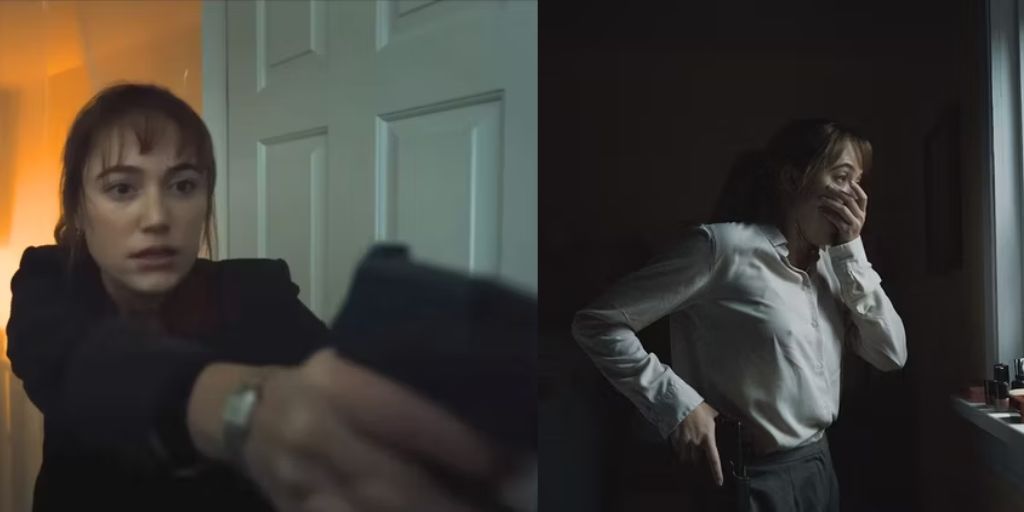
His partner, Sage (Liana Liberato), is an editor on the brink of a career shift, burdened by the financial weight of supporting them both. She wants emotional reconnection, but Diego’s obsession with his unwritten novel pushes her away.
The film quickly reveals sexual frustration simmering between them, and it’s clear they’ve been stuck in a cycle of expectation and disappointment.
Will and Cinnamon
Enter the strangers Andra Nechita’s Cinnamon (or “Cin”) and Alex Roe’s Will. Their arrival changes the house’s energy instantly. They’re bold, luxurious, and impossibly confident. Cinnamon’s open sensuality and mysterious connection to Diego’s favorite author dangle career advancement like forbidden fruit.
Will, meanwhile, oozes charisma and menace, turning trivial exchanges into power plays. The sexual tension crackling through each shared glance transforms the lakeside home into a theater of desire.
As the night progresses, a harmless dinner becomes a charged social experiment. Whispers turn into dares, drinks lead to confessions, and bodies inch closer under the pretense of curiosity. The audience begins to wonder: who leads and who follows?
The Vibe Shift: When the Fun Turns Frightening
Morgan’s film, written by Liz Friedlander, straddles sex comedy and psychological thriller but lands awkwardly between them. For every moment of genuine seduction, there’s a line so implausible it stifles tension.
The script aims for the charged atmosphere of Funny Games or Speak No Evil, both masterworks of social discomfort, but the tonal balance falters.

The early sequences brim with potential: a couple out of sync, trapped with sensual strangers whose motives grow murkier. Yet, for all the erotic aesthetic, the characters are frustratingly hollow. Their choices rarely mirror real human instincts.
Why would Sage, an intelligent and self-possessed woman, remain in that house once the seduction turns sinister? Why does Diego oscillate between timid victim and reckless participant without explanation?
The problem lies not in absurdity itself, plenty of pulp thrillers thrive on exaggeration, but in inconsistency. Morgan introduces provocative themes about lust, power, and creative desperation, only to treat them superficially.
Even the supposed critique of performative liberation, where sex becomes just another form of power play, feels hollow because the writing never commits to coherence.
When Sex Becomes a Weapon
Still, Bone Lake isn’t without its provocative pleasures. Cin and Will’s manipulations are fascinating to watch when the film leans into voyeurism.
Morgan’s camera knows where to linger on trembling hands, glistening skin, and silent glances that reveal more than dialogue ever could. The seduction scenes blur lines between consent and coercion, between curiosity and compulsion.
As the couples engage in “games” that test their boundaries, the atmosphere thickens. The film’s most gripping moments occur when words dissolve into body language, when danger hides in intimacy. For brief stretches, the viewer genuinely feels what Sage feels: disoriented, intrigued, and afraid.
But the tension never sustains itself. The erotic thrill loses energy once the violence begins, mainly because the film’s emotional core is too weak to support it. By the time the story crescendos into chaos with bodies drenched in blood and morality abandoned, the absurd excesses merely exhaust rather than excite.
Character Depth or Surface Shock?
Diego emerges as a confused construction, torn between shame and arrogance. He labels himself both victim and visionary but owns neither identity.
Sage, supposedly the emotional compass, spends too long reacting instead of acting. When she finally retaliates in the finale, it feels less like triumph and more like a necessity, a catharsis poorly earned.
Cinnamon and Will, despite being archetypal predators, feel livelier. Their exaggerated behavior almost redeems the film through sheer audacity. Nechita’s performance, in particular, injects moments of gleeful camp that recall 90s erotic thrillers, those unapologetically raw experiments in desire and deceit.
Morgan’s direction flirts with satire but rarely crosses into bold commentary. If anything, Bone Lake tries to say that sex reveals the monsters within us, yet it never supports this thesis with convincing character work. Instead, it settles for glossy chaos, a visual feast lacking emotional fiber.
Visual Style and Ethical Stumbles
Cinematographer Nick Matthews crafts a neon-smeared aesthetic that’s both alluring and artificial. The forest setting glows with saturated reds and blues, evoking tension even when the script doesn’t.
But some creative decisions betray poor judgment, particularly in the lighting of blood effects that appear visually dubious, raising unintended racial undertones. It’s an example of how aesthetic ambition sometimes eclipses sensitivity.
Stylistic control matters deeply in erotic thrillers because atmosphere functions as narrative. Every lighting cue, musical transition, and camera angle should intensify the mood or moral confusion.
In Bone Lake, these choices often distract rather than enhance. What could have been a feverish commentary on lust and manipulation becomes a noisy collage of missed opportunities.
The Aftertaste of Excess
By its final act, Bone Lake spirals into absurdity. Blood, betrayal, and implausibly poetic death scenes compete for screen time. And while some of this chaos may entertain, the lack of emotional investment undermines any lasting impact. When the survivors stumble out of that forest, we aren’t horrified; we’re simply relieved it’s over.
It’s not that absurdity can’t work in a thriller. The problem is commitment. The movie constantly hints at psychological commentary, yet embraces pulp violence without finesse. The result is a film neither as sensual as it wants to be nor as horrifying as it could have been.
Still, Morgan deserves credit for risk-taking. Few contemporary female directors tackle erotic horror with such audacity, even if the execution falters. The ambition beneath the missteps suggests a filmmaker experimenting with boundaries that mainstream thrillers often shy away from.
Bone Lake wanted to be a fiery statement about the tension between carnal desire and human morality. Instead, it ends up a curious mess, occasionally exciting but mostly frustrating. Its visual gloss and seductive atmosphere mask a screenplay unsure of what it wants to say about obsession, fantasy, or fear.
The film’s first ten minutes remain its finest, a promise of chaos that fades too soon. Like its characters, Bone Lake mistakes temptation for meaning and spectacle for truth. Viewers seeking raw sensuality might find sparks of interest, but those craving coherence will leave feeling strangely unsatisfied.
Also read: Genndy Tartakovsky: The Creative Mind Behind ‘The Black Knight’ Fights for His Vision