“If that’s what you want, you’re just watching the wrong show.” That’s how Eric Kripke responded to growing criticism around The Boys Season 5, as fans continue to call out the show’s slower pacing and so-called “filler episodes.”
In an interview with TV Guide, Kripke addressed the backlash directly, explaining the creative decisions behind the final season. He acknowledged that some viewers are dissatisfied with the lack of constant action but emphasized that the storytelling is intentionally focused on character development.
Kripke questioned the expectations head-on, pointing out that nonstop spectacle would ultimately feel hollow. He argued that without deeper character exploration, the major events in the final episodes would not carry the emotional weight needed for a satisfying conclusion.
Fan Criticism: Why Viewers Are Calling It Slow and “Filler”
The criticism surrounding The Boys Season 5 largely stems from its shift in storytelling focus. Earlier seasons built a reputation on relentless pacing, with surprising deaths, intense action sequences, and constant narrative escalation. However, the final season has taken a more measured approach, dedicating significant time to exploring character psychology and relationships.
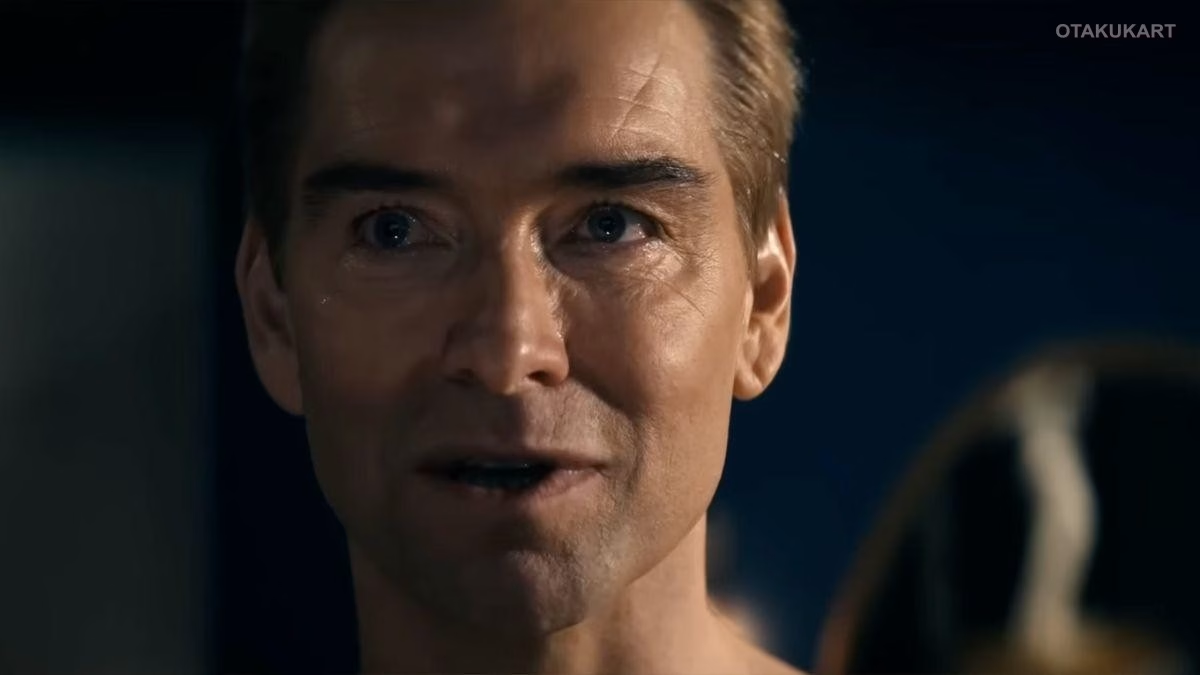
Fans have specifically pointed to episodes like “One-Shots” and “King of Hell” as examples of this shift. These episodes dive deep into the perspectives and inner struggles of multiple characters, including Homelander, Firecracker, and members of The Boys themselves. While some viewers appreciate the added depth, others argue that these episodes do not significantly advance the central plot.
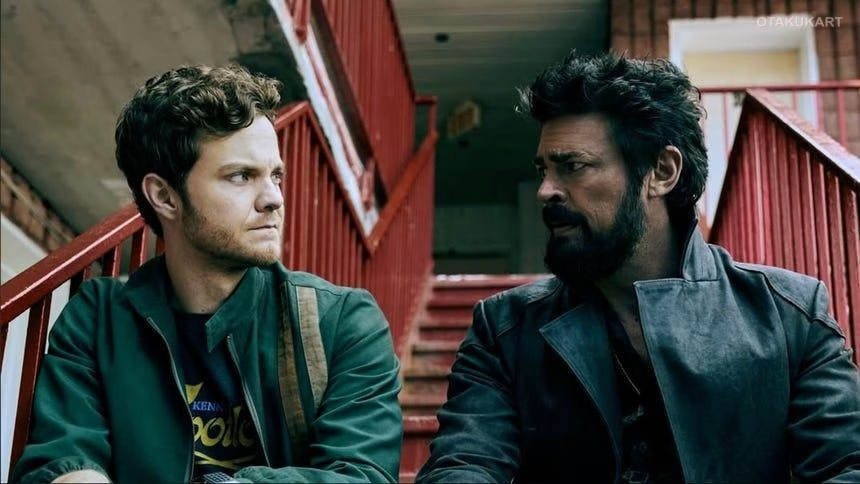
On platforms like Reddit and X, the term “filler” has been frequently used to describe these slower installments. For many fans, the expectation of constant action clashes with the show’s current direction. This has created a divide within the audience, where one side values character exploration while the other prioritizes plot progression and spectacle.
At the same time, the criticism reflects how expectations have evolved. The Boys set a high bar early on, and any deviation from its signature intensity is immediately noticeable. This makes pacing changes feel more pronounced, even when they serve a larger narrative purpose.
“None of It Matters Without Character” – Eric Kripke’s Response
Eric Kripke directly addressed the backlash in an interview with TV Guide, where he acknowledged the online dissatisfaction while defending the show’s creative choices.
Kripke stated,
“None of the things that happen in the last few episodes will matter if you don’t flesh out the characters.”
This quote highlights the central philosophy behind Season 5, where emotional investment is prioritized to give the final payoff more weight.
He also responded to fans expecting constant action, saying,
“What are you expecting? Are you expecting a huge battle scene every episode?”
Kripke made it clear that such an approach would not only be unrealistic from a production standpoint but would also weaken the storytelling. He added,
“One, I can’t afford that. And two, it would be so empty and dull, and it would just be about shapes moving without having any import.”
In a similar vein, coverage from Variety reinforces that the final season is designed to balance spectacle with meaningful character arcs. Kripke’s comments suggest that the slower pacing is not a flaw but a deliberate strategy to enhance the narrative’s emotional impact.
Why Season 5 Is Focused on Character-Driven Episodes
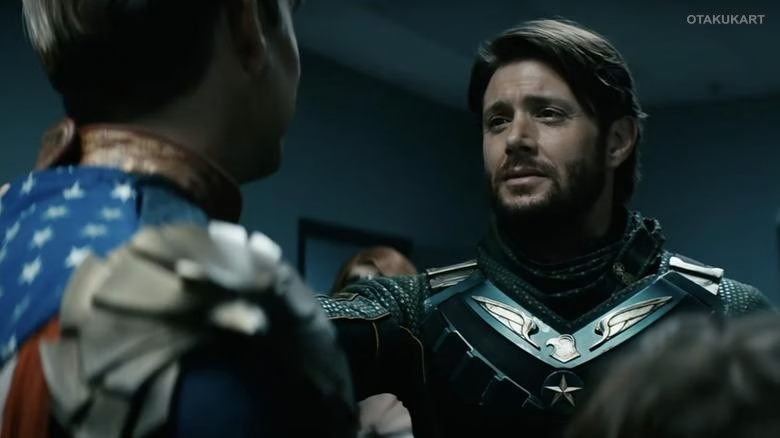
The structure of Season 5 reflects a conscious decision to explore multiple character arcs in depth. Episodes like “One-Shots” shift perspectives to characters such as Firecracker, Black Noir, Sister Sage, and even Soldier Boy, allowing viewers to see the story from different angles. This approach expands the narrative beyond its central conflict and adds layers to The Boys universe.
Kripke emphasized the importance of these moments, explaining that it was crucial to develop relationships and internal conflicts. He pointed out that evolving dynamics, such as the relationship between Homelander and Soldier Boy, and the fractures within The Boys themselves, are essential to the story’s progression.
He further explained,
“At no point during the writing of it was I like, ‘Oh yeah, we’re making filler episodes. So who cares?’ We all thought at the time we’re really getting these important character details.”
This directly challenges the idea that these episodes lack purpose.
Kripke also highlighted the scale of the show’s ensemble, noting that with around 14 to 15 major characters, each one deserves proper development. According to him, television is fundamentally about characters, and neglecting that aspect would undermine the entire series.
“You’re Watching the Wrong Show” – Addressing the ‘Filler’ Debate
One of Kripke’s most direct responses came when he addressed the perception that “nothing happens” in slower episodes. He pushed back strongly, stating that major developments are still taking place, just not always in the form of action sequences.
He explained,
“The craziest, biggest moves happened. It just wasn’t someone shooting someone else and going, pew, pew, pew.”
This quote underscores the difference between plot-driven and character-driven storytelling, where significant changes can occur internally rather than through external action.
Kripke even suggested that viewers expecting nonstop action might be misunderstanding the show’s intent. He remarked that if constant spectacle is the only expectation, then The Boys might not align with those preferences anymore. This bold stance reflects the creative team’s confidence in their storytelling direction.
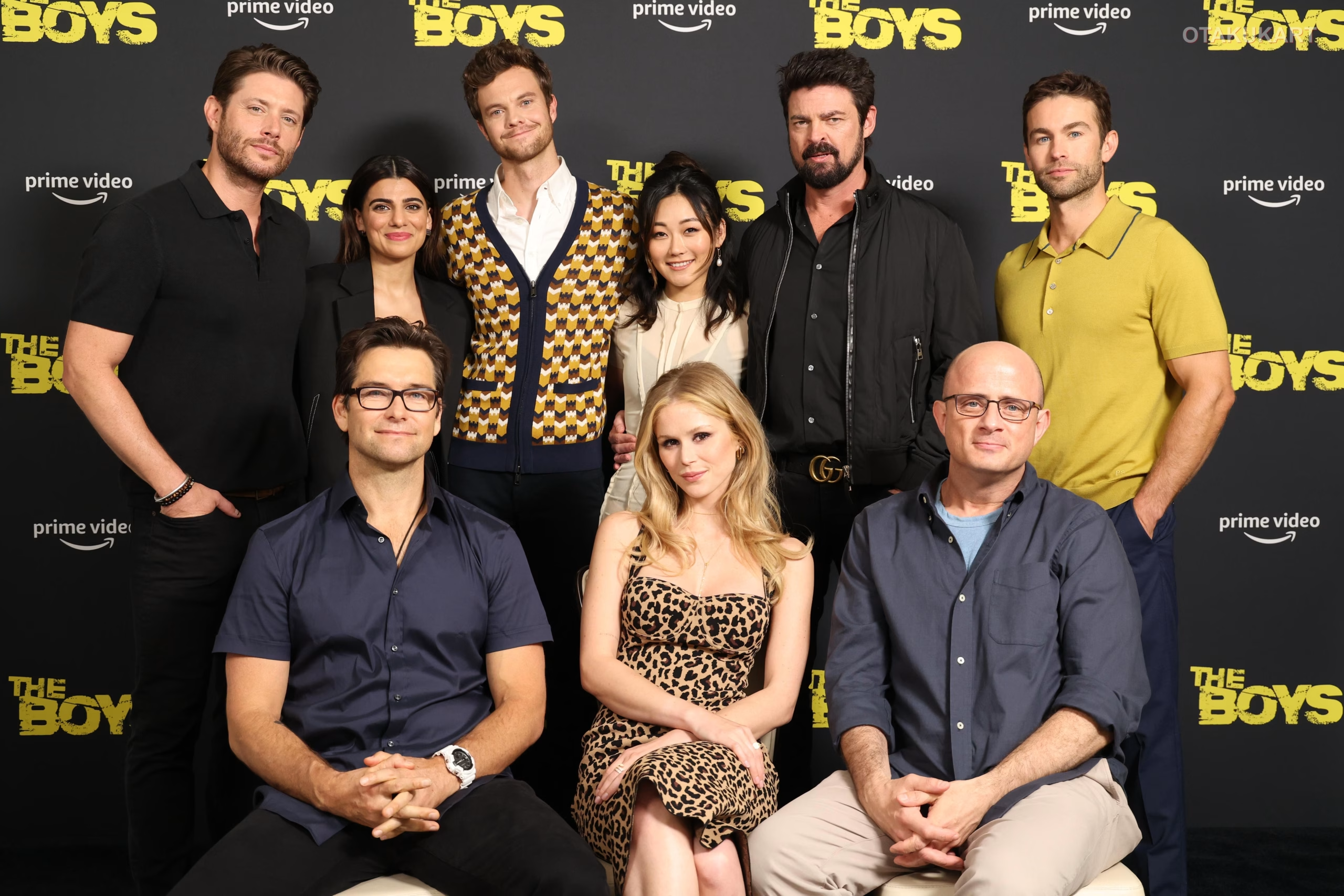
At the same time, his comments highlight a broader issue in modern television, where audiences often equate action with progress. The Boys challenges this notion by focusing on emotional and psychological developments that may not be immediately visible but are crucial to the narrative.
The Weekly Release Factor: Why It Feels Slower
Another key point raised by Kripke is the impact of the weekly release schedule on audience perception. Unlike binge releases, where viewers can consume multiple episodes at once, weekly releases create gaps that can amplify the feeling of slow pacing.
Kripke acknowledged this possibility, saying that watching one episode at a time might make slower installments feel more pronounced. He explained that if the season were binged in one go, the pacing might feel more balanced and cohesive.
He noted, “If you were bingeing it or watching it all at once, you would have a very different experience than watching one episode a week.” This insight suggests that the issue may not solely lie in the content itself but also in how it is consumed.
Despite this, Kripke expressed support for the weekly release model, as it encourages discussion and engagement among fans. However, he admitted that it could also contribute to frustration when viewers have to wait a week after an episode that feels slower than expected.