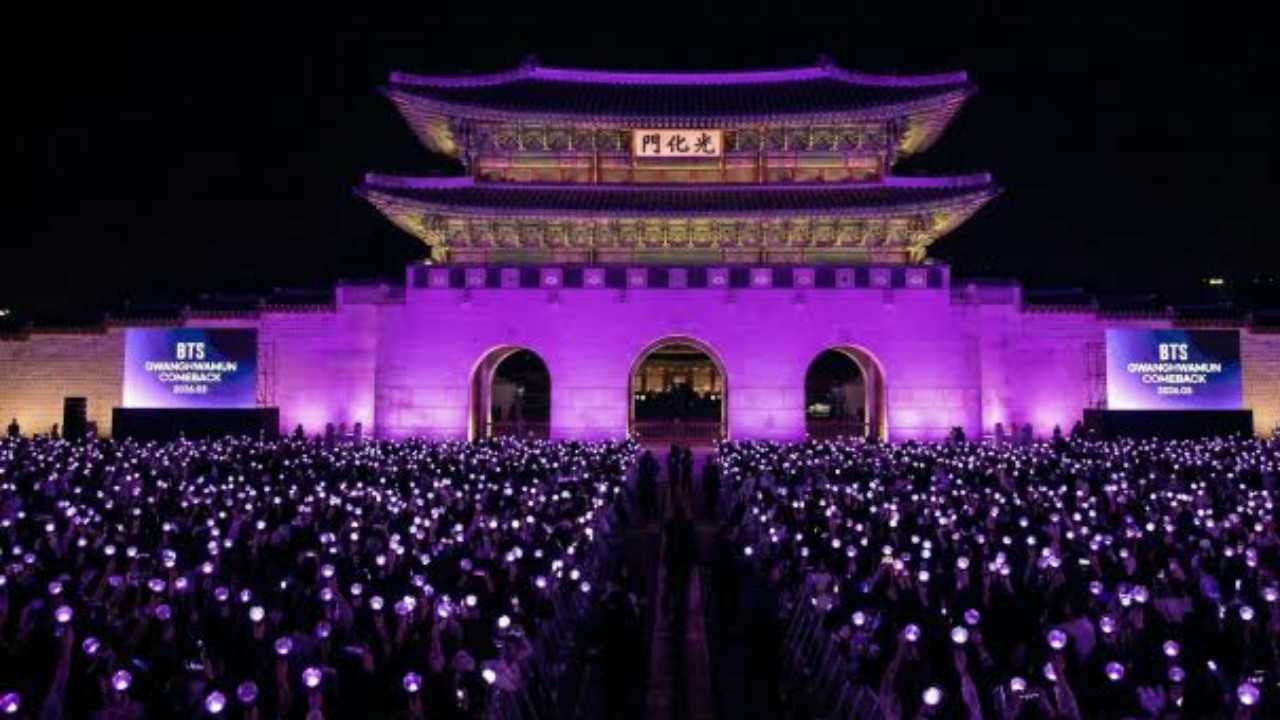
The heart of Seoul is preparing for a logistical feat of historic proportions. On March 21, 2026, BTS will hold their first full-group live performance in nearly four years at Gwanghwamun Square.
Titled “BTS The Comeback Live: Arirang,” the free concert is the centerpiece of a citywide celebration following the March 20 release of their fifth studio album.
While BigHit Music is coordinating to admit approximately 15,000 ticketed fans into designated standing and seating zones, the Seoul Metropolitan Police Agency (SMPA) is bracing for a reality that extends far beyond the barricades.
Based on the group’s unprecedented drawing power and the symbolic nature of their reunion, authorities expect a massive “spillover” effect.
SMPA Commissioner Park Jeong-bo announced that police are preparing for a staggering crowd of up to 260,000 people to converge on central Seoul.
This estimate assumes that every available inch of Sejong-daero- from the stage at the northern end of the square down to the Sungnyemun Gate- will be packed with fans hoping to catch a glimpse of the global icons or simply experience the atmosphere of their return.
A King’s Welcome: The Royal Staging and Global Reach
The production for the Gwanghwamun concert is designed to blend modern pop spectacle with South Korea’s deep historical heritage. In a dramatic opening sequence, the seven members are scheduled to process through the “King’s Road” within Gyeongbokgung Palace.
The path will lead them through the Geunjeongmun and Heungnyemun gates, out through the main Gwanghwamun gate, and onto the woldae (royal ceremonial platform) before they finally reach the T-shaped main stage.
This visual alignment with the historic seat of power is a deliberate nod to the album’s title, Arirang, which BigHit Music states captures:
“BTS’ identity as a group that began in Korea.”
The scale of the event is equally massive in the digital realm. Directed by Hamish Hamilton- the veteran director of the Super Bowl halftime shows- the concert will be livestreamed exclusively on Netflix to over 190 countries.
This marks the first time a major South Korean cultural event will be broadcast live globally on the platform.
To accommodate those in Seoul who were unable to secure one of the coveted 15,000 tickets, the city is considering installing giant outdoor screens at nearby Seoul Plaza to distribute the crowd density and ensure that the “BTSnomics” effect, estimated to generate nearly $1 billion in local economic activity, is shared across the metropolitan area.
Operation “Safe Arirang”: Four Zones and SWAT Deployment
Given the memory of past crowd-related tragedies and the sheer volume of the expected 260,000 attendees, the Seoul police have moved into an “emergency posture.”
The SMPA has formed a dedicated task force led by the Deputy Commissioner for Public Safety to oversee a multi-layered security operation.
The venue and its surrounding areas will be strictly managed through a four-zone density system:
- Core Zone: The immediate ticketed areas around the T-shaped stage.
- Hot & Warm Zones: High-density areas along Sejong-daero where crowds are expected to be thickest.
- Cold Zone: Peripheral areas near Sungnyemun and Deoksu Palace used for crowd flow management.
To ensure public safety, authorities will deploy 13 violent crime investigation teams and forward-deploy Police Special Operations Units (SWAT) to monitor for any disturbances or potential security threats.
HYBE, the organizer, has already committed 3,553 private security personnel, but Commissioner Park has indicated that the police will request additional staffing if crowd sizes exceed the current 260,000 projection.
Transport logistics are also being overhauled; subway trains may bypass Gwanghwamun Station if platforms become overcrowded, and bus routes will be detoured for the duration of the 8:00 PM KST show.
This “all-hands-on-deck” approach reflects the city’s recognition that the March 21 concert is not just a music event, but a global diplomatic moment for South Korean culture.