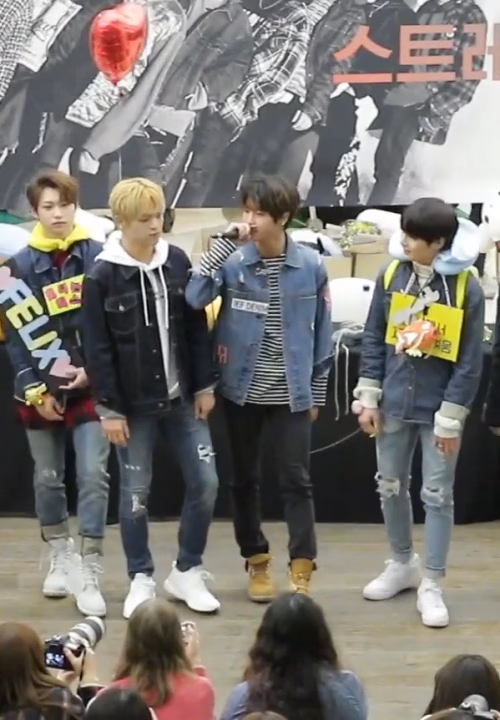

Stray Kids’ leader Bang Chan has once again demonstrated his distinct, boundary-setting approach to leadership within the K-pop ecosystem.
Known across the industry for actively communicating with his fans and calling out toxic behaviors, the multi-talented producer found himself at the center of viral discussions following his direct commentary regarding a recent online friction involving the label’s senior girl group, TWICE, and their dedicated fanbase.
As reported by Koreaboo and heavily documented across global online community spaces such as Reddit and X (formerly Twitter), the situation quickly transformed into a broader discourse surrounding fandom toxicities and the rampant, often normalized misogyny directed toward female idols.
Bang Chan’s bold choice to directly speak out against bad behaviors within his own fandom has drawn immense praise from neutral industry observers, while simultaneously sparking internal reflections among K-pop communities.
The Catalyst: A Manufactured Multi-Fandom Online War
The initial friction ignited following a overlapping set of promotional milestones within JYP Entertainment.
The controversy sparked when certain factions of Stray Kids’ fandom, STAY, began celebrating a massive announcement concerning the group’s upcoming “Stray City” festival project.
However, the online celebration unfortunately clashed with a concurrent global touring cycle being executed by their prominent senior labelmates, TWICE.
Certain internet trolls and possessive fans began spamming toxic narratives across social media, baselessly accusing TWICE and their supporters of attempting to overshadow Stray Kids’ moment, leading to targeted harassment campaigns against specific members of the girl group, including Mina, who had recently received a warm shout-out from Bang Chan.

The online backlash quickly degenerated into aggressive, highly misogynistic rhetoric, with toxic boy group stans resorting to outdated, possessive stereotypes to demean the female artists’ professional achievements and personal spaces.
Calling Out the Fandom: Bang Chan Sets the Standard for Leadership
Rather than choosing to ignore the worsening digital environment- a passive path taken by a vast majority of senior idols to safeguard their commercial fandom relationships- Bang Chan chose to directly address the toxic behaviors.
Utilizing communication channels to reach his fanbase, the Stray Kids leader did not mince words when addressing the unprovoked hostility directed at the girl group and their supporters.
Bang Chan explicitly urged his fans not to indulge in toxic fanwars, stepping forward to actively protect and validate the girl group stans who were being targeted by aggressive behavior.
He went out of his way to highlight that the members of TWICE are not competitors or enemies, but are close friends and respected industry colleagues who deserve absolute courtesy.
This explicit intervention stood out within the community, with many fans pointing out that while most male idol groups completely disconnect from the online harm their fanbases cause to women in the industry, Bang Chan actively holds his own community accountable.
As a long-time observer noted on a popular discussion board,
“Bang Chan always keeps it real. He isn’t afraid to step up and tell his own fandom when they are being weirdly misogynistic or crossing a line. That is what real leadership looks like.”
The fallout from his direct stance has re-ignited long-standing conversations regarding the intense parasocial entitlement that feeds toxic boy group fanbases.
While some defensive internet users expressed discomfort with their own idol reprimanding them, the overwhelming global consensus has been heavily supportive of the Stray Kids frontman.
By actively shutting down the toxic multi-fandom war and directly standing up against the harassment directed toward female artists, Bang Chan has reinforced an invaluable standard for modern celebrity culture: that an artist’s loyalty to basic human decency and mutual respect will always take priority over enabling the toxic entitlement of their own fanbase.