
Netflix has once again proven its dominance in the streaming era, with Stranger Things leading the list of the most-watched TV series of the 2025–2026 season. According to newly released Nielsen multiplatform data, the show’s final season averaged an impressive 32.9 million viewers over a 35-day viewing window, placing it firmly at the top of the year’s rankings. The milestone not only highlights the enduring popularity of the franchise but also underscores Netflix’s growing influence across the broader television terrain.
The rankings, analyzed and reported by Variety, offer one of the clearest comparisons yet between streaming platforms and traditional broadcast networks. By combining live viewing with delayed streaming consumption, Nielsen’s multiplatform system provides a more comprehensive look at what audiences are actually watching.
Stranger Things Ends on a Massive High
The final chapter of Stranger Things didn’t just meet expectations; it exceeded them. With nearly 33 million viewers on average, the series closed out its run as the most-watched non-sports program of the season. The show’s ability to maintain cultural relevance over multiple seasons played a significant role in its success, with its concluding episodes drawing both longtime fans and new viewers.
The performance also reinforces Netflix’s ability to turn original series into global phenomena. While the platform has faced increasing competition in recent years, Stranger Things demonstrates that major tentpole releases can still drive massive engagement and dominate industry rankings.

Netflix Leads the Streaming Pack
Beyond Stranger Things, Netflix had a strong presence throughout the top rankings. Titles like His & Hers and Bridgerton secured major viewership numbers, while several other Netflix originals filled out the list. In fact, the majority of the top 10 shows came from Netflix, signaling the platform’s continued strength in producing widely watched content.
One of the most notable entries was Sean Combs: The Reckoning, which also performed strongly, showing the platform’s range across genres. From scripted dramas to documentary-style programming, Netflix’s lineup continues to attract diverse audiences across multiple demographics.
This level of dominance is particularly significant given the evolving nature of the TV industry. Streaming platforms are no longer just competing with each other, they are directly challenging broadcast and cable networks for audience attention.
Broadcast and Cable Still Hold Ground
While streaming services dominated much of the list, traditional networks still managed to secure key positions. CBS’ Marshals, part of the expanding Yellowstone universe, emerged as the most-watched broadcast show of the season with 20.7 million viewers. Other network hits like Tracker and High Potential also performed well, proving that linear television continues to play a role in the modern viewing ecosystem.
Paramount+ and HBO Max also made appearances in the rankings, with shows like Landman and The Pitt drawing strong audiences. These results highlight how hybrid distribution models, where shows air on both broadcast and streaming platforms, are becoming increasingly important in maximizing reach.
However, the trend remains clear. Streaming-first releases are driving the biggest numbers, especially when supported by strong marketing and global availability.
What Nielsen’s Data Reveals About Viewing Habits
Nielsen’s multiplatform ranking system represents a major shift in how TV success is measured. By factoring in 35 days of viewing across both live and streaming platforms, the data captures a more accurate picture of audience behavior. This approach allows for direct comparisons between streaming hits and traditional network shows, something that was difficult to achieve in the past.
The data also reveals how time-shifted viewing has become a critical factor in a show’s success. Many viewers are no longer watching episodes live, instead choosing to stream content on their own schedules. This shift has benefited platforms like Netflix, where binge-watching remains a key part of the viewing experience.
At the same time, the rankings exclude sports programming, which still dominates live television ratings. Without those numbers, scripted and unscripted series are able to compete on a more level playing field.
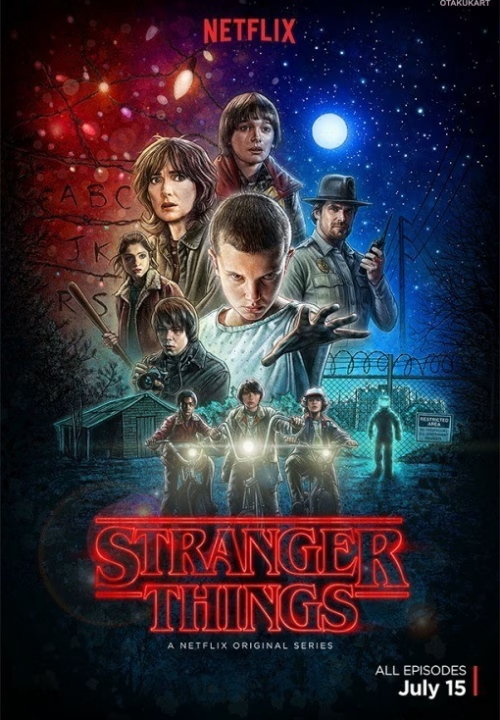
| Premiere Date | July 15, 2016 |
|---|---|
| Network / Service | Netflix |
| Creator | Matt Duffer, Ross Duffer |