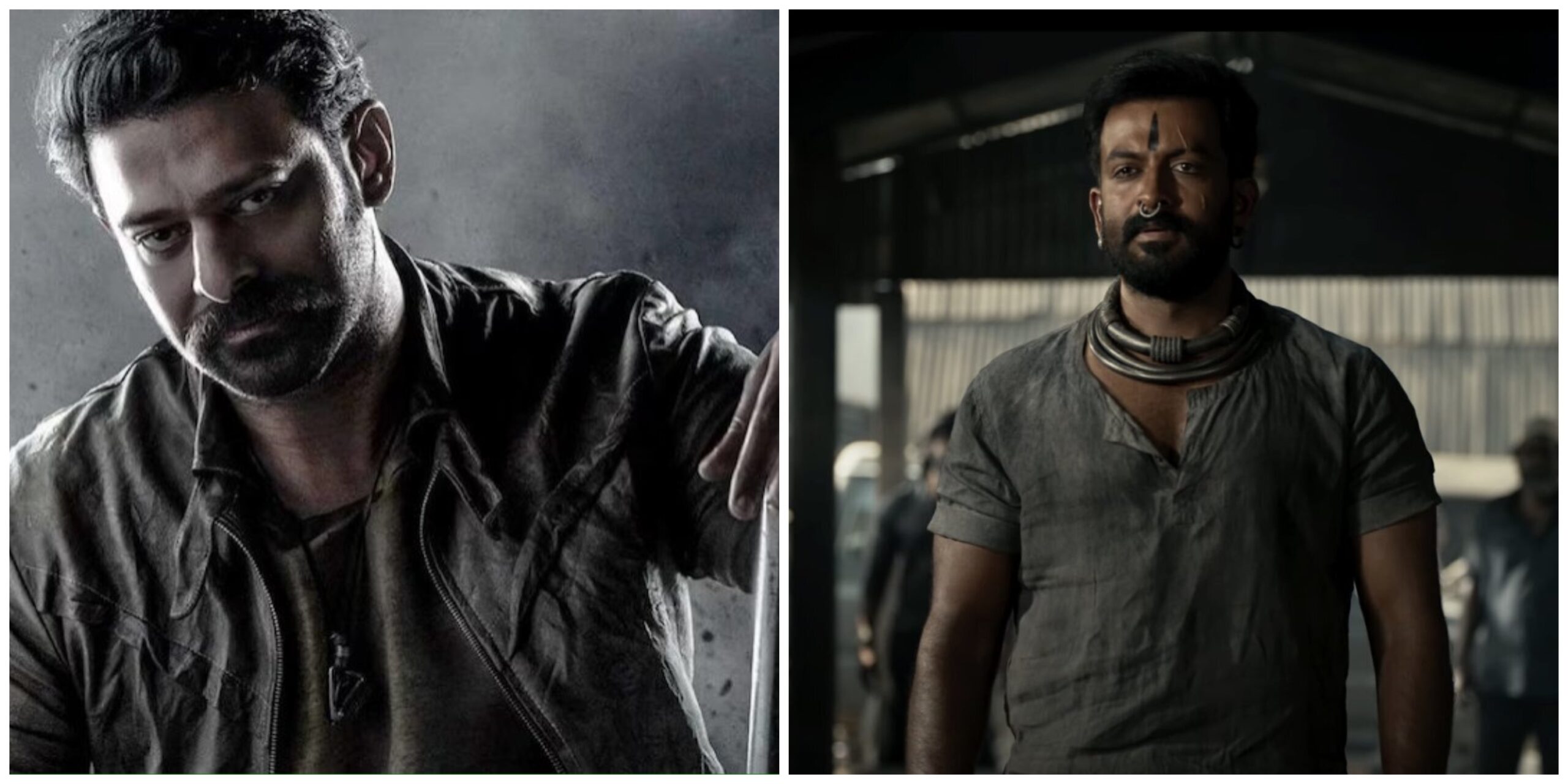
The film Salaar: Part 1 – Ceasefire wraps itself around serious action and deep loyalty that grows from childhood friendship. It introduces a world where violence is not a choice but a requirement for survival. This Telugu-language action drama, directed by Prashanth Neel, places its protagonist Deva in a brutal territory ruled by betrayal and hierarchy.
From the start, the movie creates an emotional link between Deva and Varadha, a bond that becomes the backbone of the entire storyline. Their connection is shaped early, as Deva risks everything to protect Varadha during a crucial moment.

After years apart, Varadha resurfaces, pulling Deva into a political storm in Khansaar, a city where ruling families fight like predators in a jungle. Deva, once peaceful and hidden, returns to his violent ways to protect the friend he once swore to shield. The plot gets heavier with each scene, as trust is tested and enemies become more vicious.
Deva’s reawakening is not just for battle but for justice and personal responsibility. As the city’s power dynamics tighten, the film reveals how loyalty and old promises can resurface to turn one man’s quiet life into a battlefield. Salaar never stops pressing its characters into extreme choices, and by the end, it leaves viewers questioning where true strength really lies.
The Backstory That Sorrounds Khansaar’s Crisis
Khansaar functions as more than just the setting; it stands as the beating heart of the power struggle. The city is split between influential families, each hungry to control the throne. But what makes the situation unstable is the death of the sitting king.
With no direct heir strong enough to silence opposition, chaos spreads like fire across the region. This is the point where Varadha, son of the dead king, steps up to claim what he believes belongs to him.
Varadha’s position isn’t welcomed by everyone, though. Several important players in the council refuse to support him. While others play politics, Deva quietly watches from the sidelines. But once Varadha’s life is threatened, Deva steps back into action, carrying an unshakable commitment to a promise he made during childhood.
The city turns into a war zone as Deva begins taking down threats one by one, protecting Varadha with calculated rage. As Khansaar’s council grows restless, the film begins to paint the real reason why Deva is feared. His methods are brutal, but his loyalty is unwavering. The contrast between Deva’s silent calm and his destructive violence drives the story forward.
This war is not only political—it’s deeply personal. Every move Deva makes carries the weight of promises made long ago. The film does not try to soften his violence, instead it uses it to show the lengths someone can go when old oaths are taken seriously.
What Took Deva Back Into Violence?
Deva’s return to Khansaar marks more than just a physical comeback. It is a psychological return to the version of himself he had locked away. Years before, he had walked away from that life after rescuing Aadhya, the daughter of a man targeted by enemies in Khansaar.
Their bond became a rare human connection for Deva, and her safety offered him something peaceful. Yet when Khansaar’s unrest starts to affect her, Deva is left with no option but to protect once again.
The arrival of Aadhya back in his life is what pushes him over the edge. When her life is caught in the crossfire of Khansaar’s violence, Deva wastes no time showing what kind of man he used to be. From there, the film becomes a display of brutal showdowns, with Deva eliminating enemies with efficiency. The emotional pull remains clear—he’s not just fighting for a throne, he’s fighting for the people he once vowed never to fail.
During the second half, Deva’s reputation becomes Khansaar’s worst nightmare. His presence alone throws fear into the council members, and some begin to flee while others scramble for survival. The power dynamics start crumbling, and it becomes clear that Varadha’s rise will only happen through Deva’s strength.
Even though the battle scenes are intense, what holds attention is Deva’s sense of responsibility. He doesn’t act out of ambition. He doesn’t want the throne. Every action comes from loyalty, making his violence purposeful and emotionally grounded.

The Last Betrayal
Just when it seems Varadha’s path to power is becoming secure, the story takes a sharp turn. A surprising betrayal cuts through Deva’s trust, and a secret is revealed—one that completely changes how viewers see the bond between the two friends. The movie throws in this twist during its closing moments, keeping audiences hooked and waiting for part two.
It turns out that Varadha may not have been fully honest all along. There’s a backstory about how Deva was forced out of Khansaar in the first place. It hints that decisions were made in secret, possibly putting Deva in danger so Varadha could gain control. While the film doesn’t offer all the answers, it drops just enough clues to stir suspicion.
This betrayal hurts deeper because it touches the very thing Deva built his life around—trust. The final scene doesn’t just close a chapter; it opens a floodgate for what will happen next. Deva now has to decide whether his loyalty has been misplaced and whether he should keep protecting someone who may have used him all along.
The silence in Deva’s final look says everything. It tells a story of heartbreak, confusion, and possibly revenge. While the city sleeps for a moment, the next part promises to bring even more chaos, especially now that trust has been broken.
What The Ending Means for Part 2
The surprise ending of Salaar sets the stage for a heavy second part. Viewers are left with one clear thought—Deva is no longer just a protector. He may soon become a threat to the very person he once shielded with his life.
This change changes everything. Where once there was loyalty, there might now be conflict. The throne that Varadha fought so hard to gain may not be his to hold peacefully.
It also hints at deeper secrets within the council. The power play in Khansaar was never just about titles; it was about manipulation, timing, and strategy.
With Deva now aware of the lies behind his exile, his next moves might not be as forgiving. The loyalty that once kept him tied to Varadha may now turn into a pursuit of justice or personal revenge.
Another important part of the setup is Aadhya. Her presence ties Deva to a more humane purpose, and any threat to her might push him even further.
There’s also a possibility that she becomes a target, especially if enemies want to weaken Deva emotionally. Her safety will likely be an important concern in the next part, shaping many of Deva’s decisions.
The closing moments also position Deva as a man ready to stop reacting and begin controlling the game. His silence no longer represents peace; it represents calculation. As he steps away from his protector role, Khansaar might soon feel the weight of his full strength, no longer limited by loyalty or promises.
Salaar: Part 1 – Ceasefire is currently available for streaming online. You can find it on Netflix, which offers both the original Telugu version and dubbed options in other languages. Anyone interested in action films with intense emotions and powerful character bonds can stream it there.
Also Read: Who is Smriti Mandhana’s Boyfriend? The Indian Cricketer’s Love Life