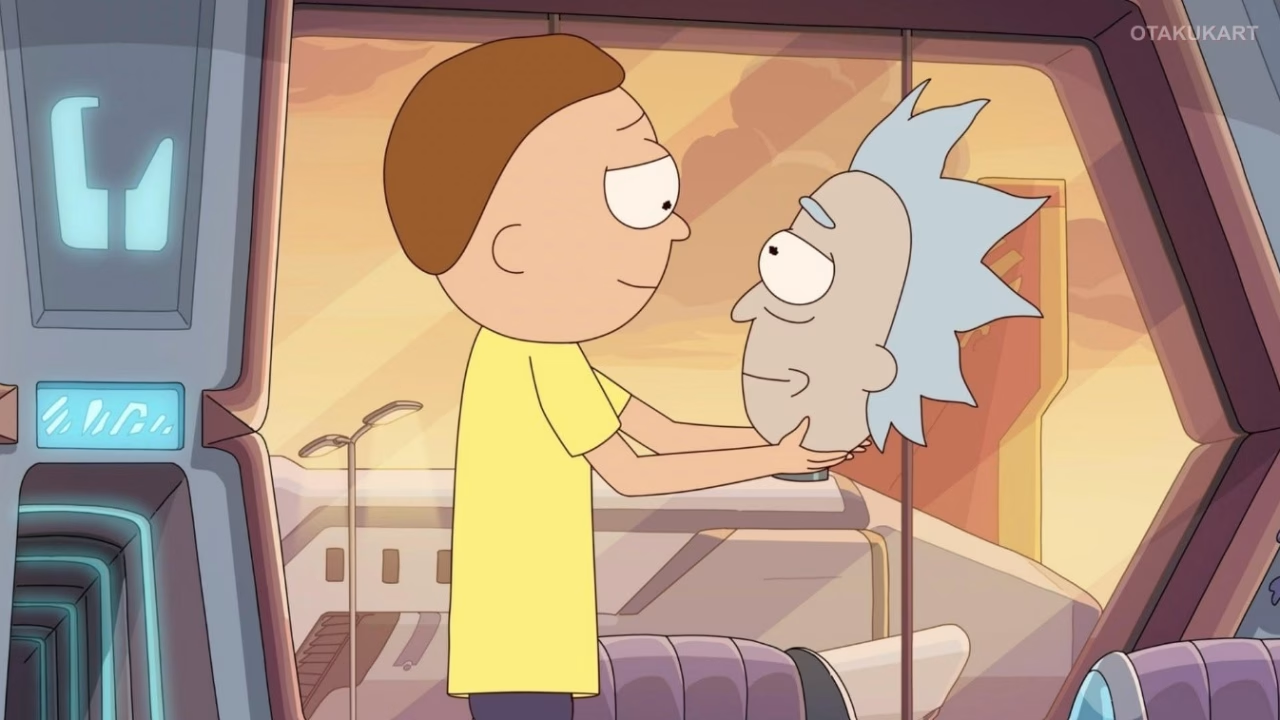
After a few uneven entries, Rick and Morty Season 9 finds its strongest balance of comedy, action, and emotional storytelling in Episode 6, “ErickerHead.” What begins as one of the show’s most ridiculous premises quickly transforms into a surprisingly thoughtful exploration of Rick Sanchez’s fractured personality. Rather than relying solely on outrageous sci-fi concepts, the episode uses them to examine why Rick continues sabotaging both himself and the people closest to him.
The result is an episode that feels bigger than its premise. It delivers thrilling action sequences, memorable character moments, and one of Season 9’s most heartfelt stories without sacrificing the show’s trademark absurd humor.
A bizarre accident leads to one of Season 9’s smartest ideas
The episode wastes no time throwing viewers into chaos.
Following an evening of excessive drinking and eating at an alien tavern, Rick, Morty, and Summer attempt to leave through a portal. Before Rick fully passes through, the portal closes, separating his head from the rest of his body. Suddenly, Morty is left carrying Rick’s talking head toward medical help, while Summer teams up with Rick’s headless body in hopes of reuniting both halves.
On paper, it sounds like another random Rick and Morty adventure.
Instead, the separation becomes the episode’s emotional foundation.
With Rick’s brain removed, his body behaves almost like an independent character. Rather than acting as a mindless machine, it reveals thoughts and emotions that Rick himself constantly buries. The episode cleverly suggests that Rick’s intelligence may also be the greatest obstacle preventing him from finding happiness.
Summer finally gets the spotlight she deserves
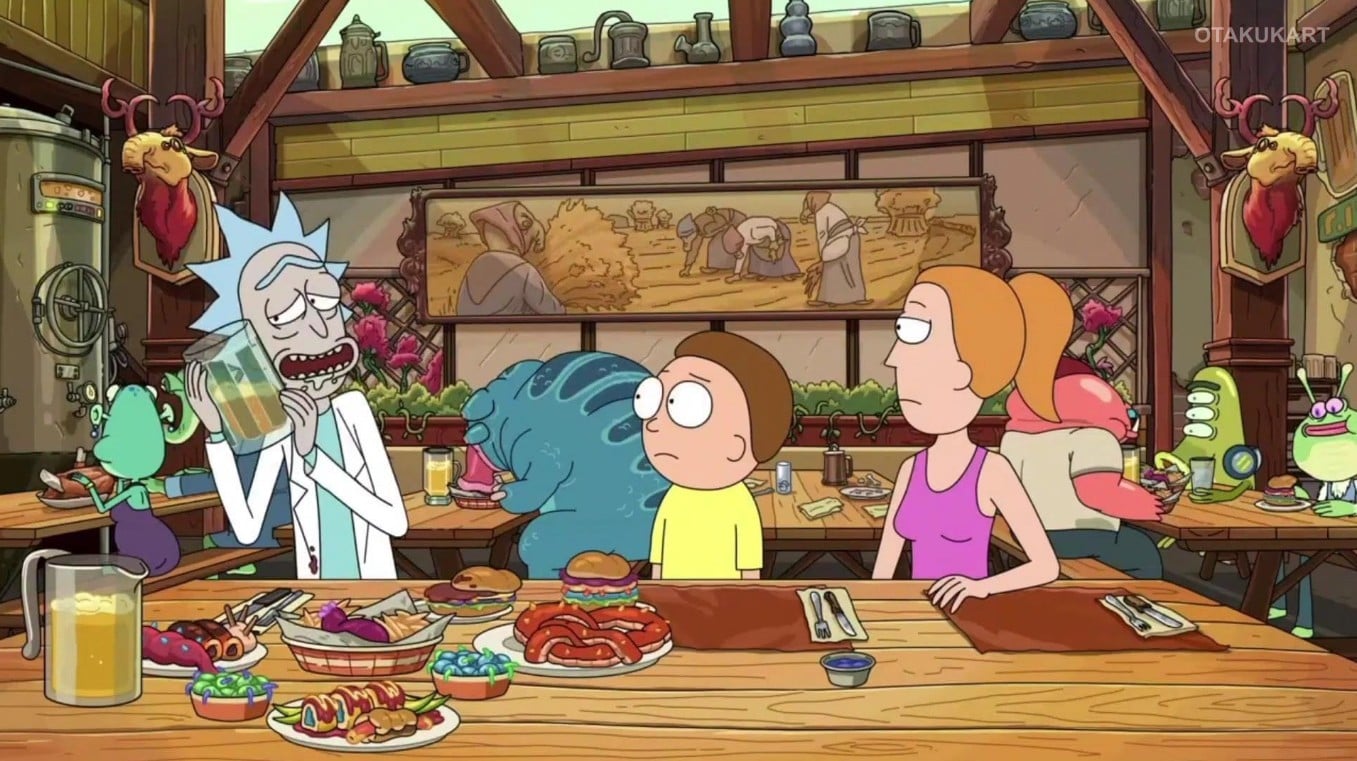
One of Episode 6’s biggest strengths is how effectively it uses Summer.
Season 9 has largely focused on Rick and Morty, leaving Summer with limited opportunities to contribute beyond supporting jokes. Here, she becomes one of the episode’s emotional anchors.
Her partnership with Rick’s body is surprisingly entertaining, but it’s also unexpectedly touching.
A heartfelt letter from Rick’s body reveals genuine affection for Summer and expresses hope that she can escape the emotional baggage carried by the rest of the Smith family. It’s a surprisingly vulnerable moment that shows a side of Rick rarely allowed to surface.
Rather than simply being another member of the family dragged into Rick’s adventures, Summer becomes someone Rick truly cares about, even if he struggles to express those feelings consciously.
The episode quietly turns their partnership into one of Season 9’s most rewarding character dynamics.
Rick’s greatest enemy has always been himself
Beneath all the science-fiction spectacle lies a familiar but powerful theme.
Throughout the series, Rick has battled governments, aliens, alternate versions of himself, and even entire universes. In “ErickerHead,” however, his greatest conflict becomes internal.
His mind and body literally refuse to trust one another.
The episode explores how Rick’s overwhelming intelligence constantly overrides his emotional instincts, trapping him in an endless cycle of self-destruction. While his body appears capable of empathy and honest connection, his mind continues pushing everyone away through cynicism and control.
That emotional conflict gives the episode surprising depth without slowing its pace.
Instead of explaining every detail, the story trusts viewers to connect the metaphor themselves, making the emotional payoff even stronger.
Spectacular action keeps the story moving
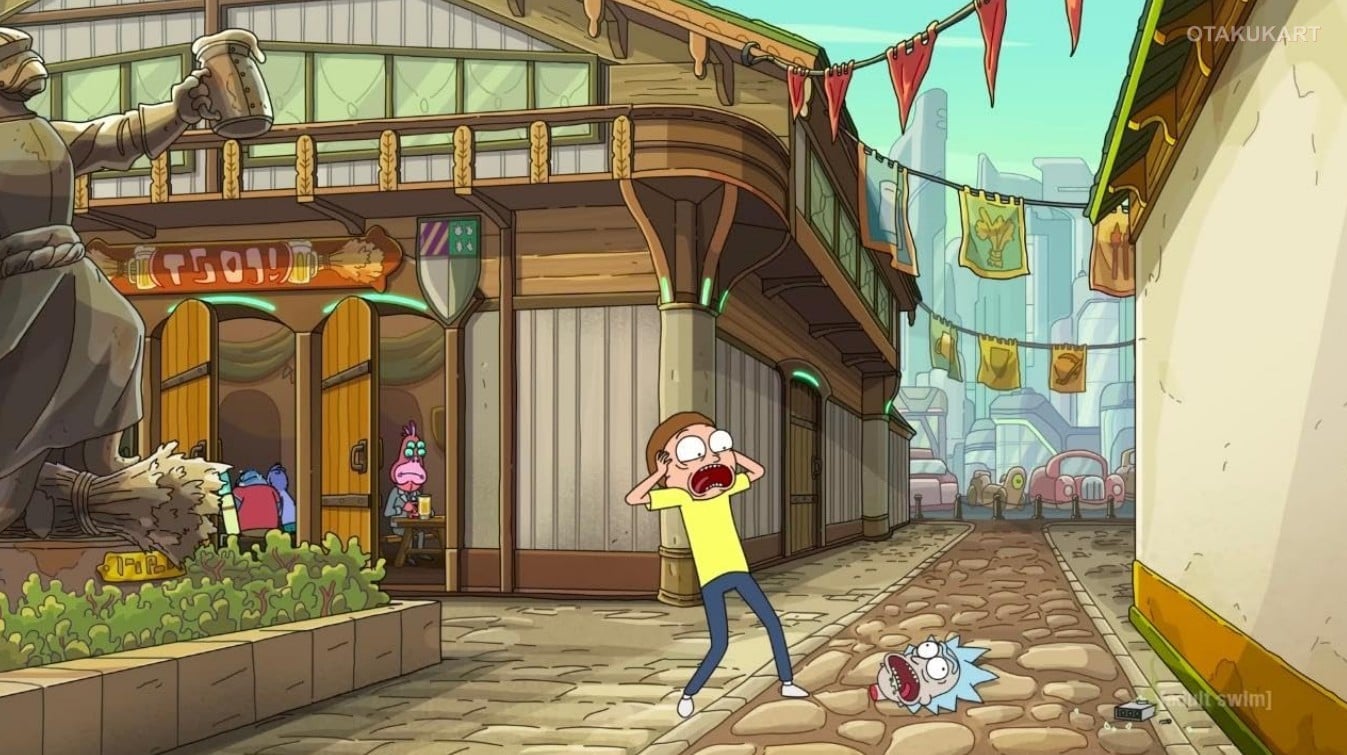
Despite its introspective themes, “ErickerHead” never forgets it’s still Rick and Morty.
The episode delivers some of the most visually impressive action scenes of the season.
Rick’s body and Summer become an unexpectedly effective team, creating several creative fight sequences that showcase just how much the animation quality has evolved. Every chase, explosion, and hand-to-hand battle feels fluid and cinematic, giving the episode a scale rarely seen in earlier seasons.
At the same time, the humor remains consistently sharp.
Meta jokes about being inside a television show, Rick’s bizarre contingency plans, and the absurd mechanics behind his survival prevent the episode from becoming overly serious.
Even the ending embraces pure Rick and Morty chaos.
After resolving the conflict between his head and body in a deliberately ridiculous fashion, Rick suddenly abandons drinking and leads Morty and Summer through an intergalactic swimming competition. The tonal shift should feel jarring, yet it somehow works because the emotional groundwork has already been established.
A standout episode that reminds us why Season 9 is improving
“ErickerHead” succeeds because it understands that the series works best when outrageous science fiction serves genuine character development.
The detached head, nonstop action, and over-the-top comedy are entertaining on their own, but they’re ultimately vehicles for a much more personal story about Rick learning to confront the parts of himself he’s spent years avoiding.
It also demonstrates that supporting characters can shine when given meaningful material. Summer’s expanded role strengthens the episode considerably, while Morty continues serving as Rick’s emotional conscience throughout the adventure.
By the end, “ErickerHead” doesn’t just deliver another entertaining sci-fi misadventure—it offers one of the clearest examinations of Rick’s emotional state in recent memory.
“ErickerHead” is one of the strongest episodes of Rick and Morty Season 9. Its bizarre premise evolves into an emotionally satisfying exploration of Rick’s divided personality while giving Summer one of her best episodes in years. Combined with excellent animation, memorable action sequences, sharp comedy, and meaningful character development, Episode 6 proves the series still excels when it blends emotional storytelling with unapologetic sci-fi absurdity.
The Good
- Excellent emotional exploration of Rick's internal conflict.
- Summer receives meaningful character development.
- Outstanding animation and action choreography.
- Strong balance between comedy and heartfelt storytelling.
- Clever sci-fi premise with satisfying emotional payoff.
The Bad
- Some supporting characters receive limited screen time.
- The final resolution is intentionally vague.
- Certain jokes may feel too meta for casual viewers.
- Emotional themes occasionally overshadow the comedy.
| Premiere Date | December 2, 2013 |
|---|---|
| Network / Service | Adult Swim |
| Creator | Dan Harmon, Justin Roiland |