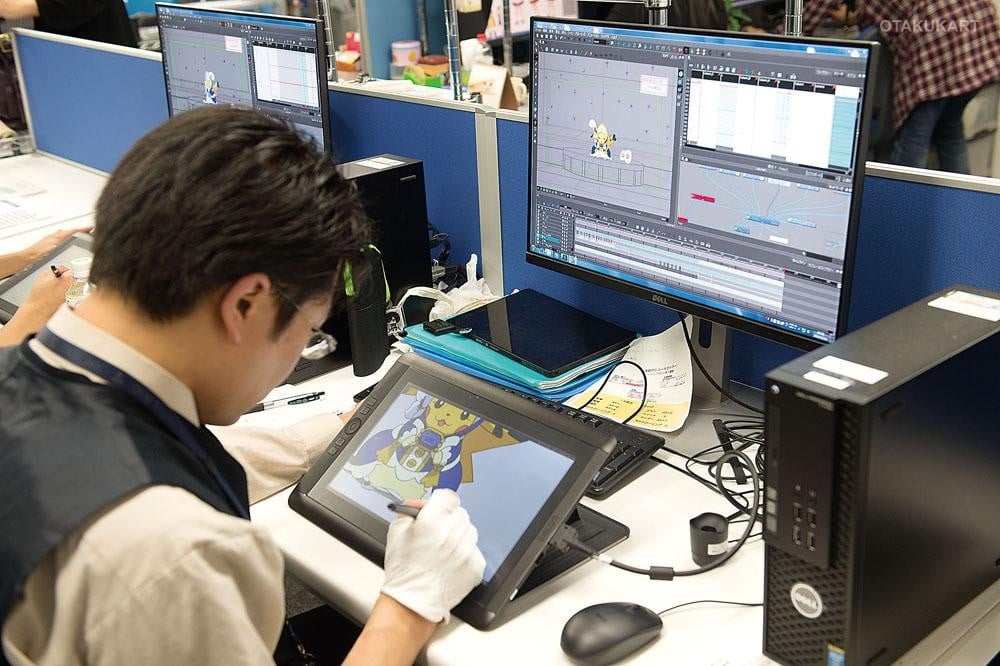
OLM, the Japanese animation studio responsible for the Pokémon television series and films, has developed an AI-assisted coloring tool that can reproduce an anime production’s visual style using just three hand-painted frames. The experimental technology is designed to reduce repetitive work for animators while keeping creative decisions in the hands of human artists.
OLM Digital board director Yotsukura Tatsuo discussed the project at the Taiwan Creative Content Fest (TCCF) in Taipei. According to Variety’s report on OLM’s AI coloring technology, the system can study three frames colored by an artist and learn the production’s line shapes and color palette in approximately 90 seconds. It can then apply those characteristics to other frames in around 15 seconds per frame.
Unlike AI models that typically depend on extensive training datasets, OLM’s approach uses material from the specific production being worked on. This allows the tool to adapt to different anime projects without requiring studios to collect enormous libraries of reference images.
“Strictly speaking, it isn’t generative AI,”
Yotsukura explained. He also emphasized that the system is designed to work within existing animation pipelines rather than replace the creative process.
OLM’s AI Tool Could Reduce Anime Coloring Workloads by 30%
The technology originated from ANIMINS, a 15-month research project led by Yotsukura under Japan’s government-backed GENIAC initiative. The project explored how artificial intelligence could support anime production, including tasks such as key animation, in-betweening, finishing and character drawing.
Japan’s Ministry of Economy, Trade and Industry (METI) has identified OLM Digital as one of the companies developing AI-supported animation workflows through GENIAC. The initiative aims to address production bottlenecks such as labor shortages and limited access to skilled artists. GENIAC’s official overview of OLM Digital’s project also describes the technology as a creative support tool rather than a replacement for animators.
At the proof-of-concept stage, Yotsukura estimated that OLM’s coloring system had reduced the painting workload by approximately 30%. However, the technology has not eliminated human involvement. Artists still need to review the colored frames, and the additional checking work has increased somewhat.
OLM is also exploring AI applications beyond coloring. The studio is investigating tools that could help directors and production managers working on long-running anime series retrieve information about previous creative decisions. AI agents could also assist with approvals and licensing management, although Yotsukura said the company is approaching these sensitive areas carefully.
OLM Says AI Still Struggles With Professional Animation Standards
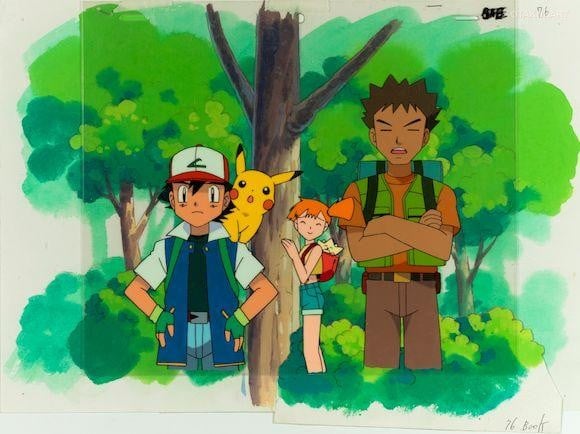
Despite the potential time savings, OLM believes accuracy remains a major challenge for AI-assisted animation. Yotsukura compared the technology to Japanese gacha machines, explaining that AI can produce results that are approximately 80% accurate, but improving them to professional standards can become considerably more difficult.
“Raising it from there to 90 or 100% turns into work so hard it can make you heartsick,”
he said.
Professional animators need tools that follow their instructions consistently and allow precise corrections. Color accuracy is another concern because even minor changes to RGB values can affect how an anime scene looks.
Other animation companies are exploring similar solutions. Toon Boom Animation’s Ember AI suite includes tools designed to automate repetitive production tasks. Its product marketing director, Harry Ravelomanantsoa, explained that one Manila-based studio reduced the coloring time for a scene lasting between 90 seconds and two minutes from 15 hours to approximately two or three hours.
Meanwhile, Charles Beirnaert, chief creative officer of Blue Spirit, said his studio does not use AI in its Netflix series Blue Eye Samurai. He also described experiments in which AI helped recreate a traditionally produced CG pilot in just a few days, although the resulting animation did not match the original’s quality.
Yotsukura compared AI’s arrival to the introduction of 3DCG, which took around two decades to become widely accepted in anime production. He believes AI adoption could happen much faster because of the technology’s current capabilities.
“I think ‘not using AI’ is probably no longer an option from here on,”
he said.
For OLM, the immediate goal is not to remove animators from production but to reduce repetitive work and give creative teams more time to focus on storytelling and visual direction.