
Netflix has dropped the official trailer for The Evil Lawyer, a new Thai legal drama set to premiere globally on June 11, 2026. Positioned as one of Thailand’s most ambitious courtroom series to date, the show blends intense legal storytelling with moral ambiguity, aiming to challenge how audiences perceive justice and truth.
According to Netflix’s official announcement, the series is built on extensive research into real-life legal systems and procedures. Rather than presenting a straightforward courtroom narrative, The Evil Lawyer dives into systemic flaws, social tensions, and the blurred lines between right and wrong.
A Story Rooted in Corruption and Survival
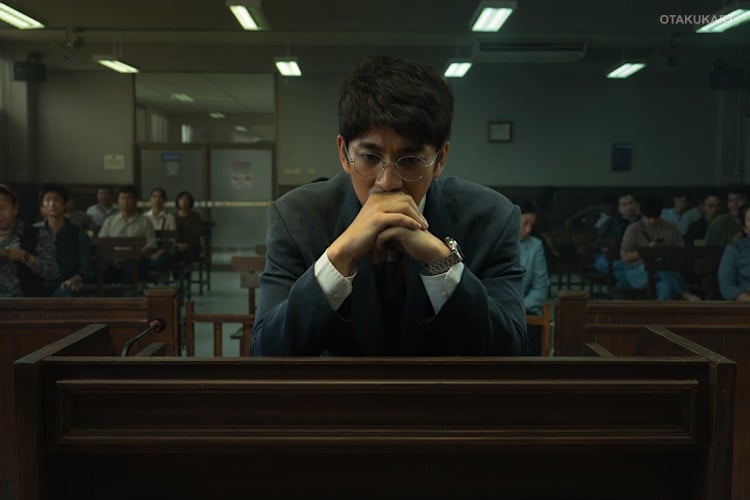
At the center of the series is Mek, played by Nat Kitcharit, a young lawyer who begins his journey with strong ideals about justice. He believes the legal system exists to protect the innocent, but that belief is quickly shattered when he is falsely accused of murder.
The accusation involves the son of a powerful police chief, placing Mek in direct conflict with the very system he once trusted. As the case unfolds, Mek is forced to shift from defending others to fighting for his own survival, exposing the harsh realities of a system influenced by power and corruption.
This central conflict drives the narrative, turning the series into more than just a legal drama. It becomes a character study of how far someone is willing to go when their principles are tested.
The “Evil Lawyer” Who Changes Everything
Mek’s journey takes a dramatic turn when he encounters Jittri, portrayed by Rhatha Phongam, a controversial defense lawyer known for her ruthless tactics. Nicknamed “the evil lawyer,” Jittri operates outside conventional ethical boundaries, using loopholes and aggressive strategies to win cases.
She agrees to take Mek’s case, but only under one condition: he must work for her. This partnership becomes one of the core dynamics of the series, as Mek is forced to navigate a legal world that contradicts everything he once believed.
The evolving relationship between Mek and Jittri highlights the show’s central theme: the tension between morality and survival. As Mek becomes more involved in her methods, he begins to question whether justice is truly about doing what is right or simply about winning.
Filmmakers Focus on Questions, Not Answers
Directed by Nottapon Boonprakob, the series intentionally avoids offering clear moral resolutions. Instead, it pushes viewers to confront uncomfortable questions about the legal system and human behavior.
“We wanted this series to push audiences toward questions with no easy answers — about the justice system, its loopholes, society, and moral boundaries,”
Boonprakob said in Netflix’s official release. He further explained that the goal was not to provide definitive conclusions, but to encourage reflection on the complexity of right and wrong.
The production team also emphasized authenticity, noting that the series was developed over several years with input from legal professionals, including lawyers, judges, and prosecutors. This research-driven approach helps ground the story in reality, even as it explores dramatic and emotional conflicts.
A Multi-Layered Legal Drama With Global Appeal
Unlike traditional courtroom dramas that focus on a single case, The Evil Lawyer unfolds through multiple interconnected cases. Each storyline reveals a different aspect of the justice system, from political influence to social inequality.
This structure allows the series to maintain momentum while deepening its exploration of systemic issues. Mek’s personal case serves as the emotional backbone, connecting each subplot into a larger narrative about power, truth, and accountability.
The show also features a strong supporting cast, including characters from various backgrounds such as politicians, judges, and everyday citizens. Each character brings a unique perspective on justice, reinforcing the series’ theme that truth is often shaped by individual experience.