

On March 17, 2026, the international entertainment community erupted in a heated debate following the 98th Academy Awards.
The controversy centers on the animated feature “K-pop Demon Hunters,” which made history by winning two Oscars, including Best Original Song.
However, the triumph was quickly overshadowed when the acceptance speech delivered by the creative team was abruptly cut short by the house orchestra, a move that has sparked widespread allegations of cultural insensitivity and “award show gatekeeping.”
A Historic Win Met with a “Rude” Interruption
“K-pop Demon Hunters” arrived at the Oscars as a critical and commercial juggernaut, praised for its vibrant animation and its authentic portrayal of K-pop culture as a medium for storytelling.
When the film was announced as the winner for Best Original Song, the composers and producers took the stage to deliver what many expected to be a milestone moment for Asian representation in music and film.
The backlash began when the music started playing to signal the winners to leave the stage while they were in the middle of a heartfelt speech acknowledging the global impact of the genre.
Fans and industry insiders took to social media to point out that other winners earlier in the evening were given significantly more time for their remarks.
One prominent critic noted:
“It felt like a calculated move to diminish the importance of a win that represents a massive shift in global pop culture. Cutting off a historic speech like that is not just a timing issue; it’s a lack of respect.”
The phrase “Oscar Speech Cut” began trending globally within minutes of the broadcast.
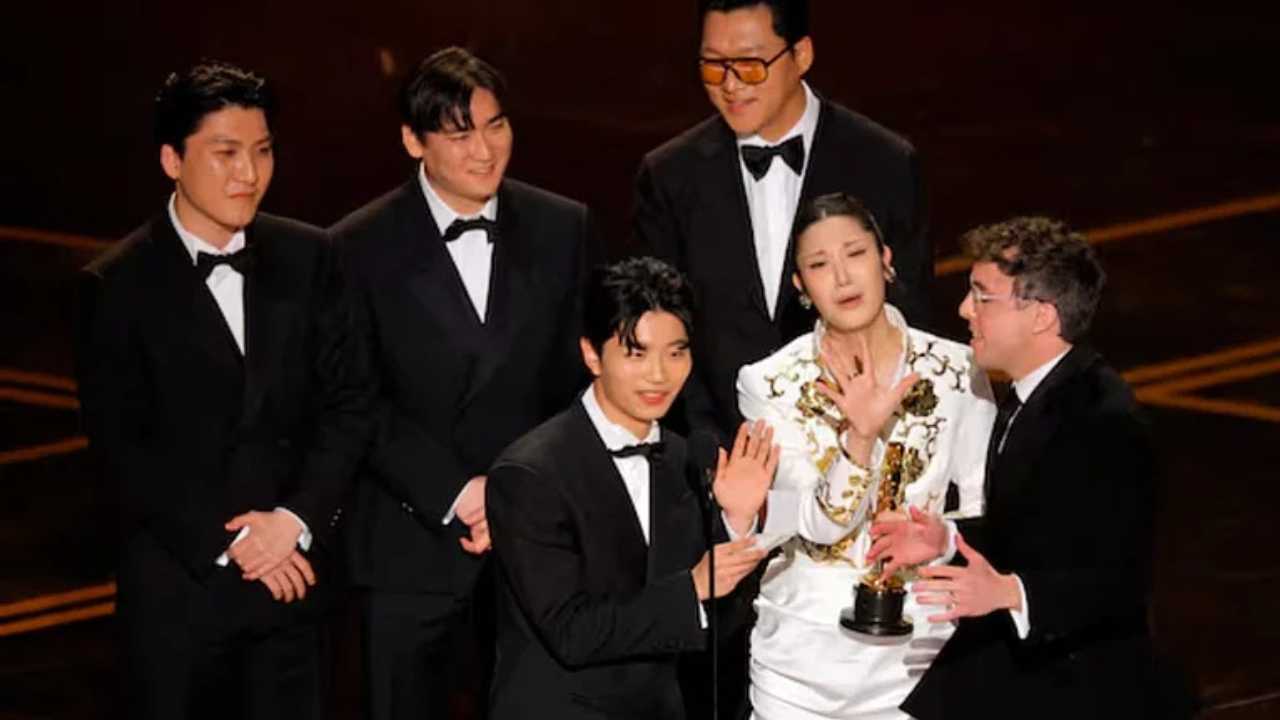
Supporters of the film argued that the interruption prevented the creators from fully addressing the cultural significance of their work, which blends traditional Korean motifs with modern pop aesthetics.
Broadcaster Response and the “BTSnomics” Connection
As the controversy intensified, the Oscars broadcaster issued a cautious response, citing strict timing protocols required for the live television window.
However, this explanation did little to mollify the public.
The production team of “K-pop Demon Hunters” later shared their full, intended remarks via social media, which included a message of empowerment for young artists across Asia.
The incident has also been viewed through the lens of the broader “BTSnomics” phenomenon- the immense economic and cultural power of K-pop that is currently being seen in the lead-up to the BTS 2026 comeback.
Critics argue that while traditional Western institutions are happy to profit from the “K-wave” through viewership and engagement, they still struggle to provide equal space for these creators on their most prestigious stages.
Industry observers remarked on the irony of the situation:
“The Academy clearly wanted the ‘K-pop’ audience for the ratings, but wasn’t prepared to give the creators the podium.
This is a recurring theme where the global demand for Asian content is recognized, but the individuals behind it are still treated as secondary to the broadcast schedule.”
Despite the speech controversy, the dual Oscar win remains a massive achievement for the film.
It has further solidified the position of K-pop-themed content as a dominant force in the global film industry, ensuring that the “Demon Hunters” will be remembered far longer than the music that tried to usher them off the stage.