Hotori: Simply Wishing for Hope is a rare kind of anime that focuses less on spectacle and more on emotional storytelling. With AnimEigo set to release the OVA on Blu-ray on June 9, this marks the first time it will be officially available in English. That alone makes it an important release, but what truly stands out is how well the story holds up even years after its original debut.
At a time when sci-fi anime often leans into action or complex worldbuilding, Hotori takes a much quieter route. It builds its narrative around memory, identity, and human connection, delivering a compact yet meaningful experience. The new HD restoration and English dub further make it accessible to a broader audience, giving this overlooked title a second chance to find recognition.
A Simple Story With Strong Emotional Depth
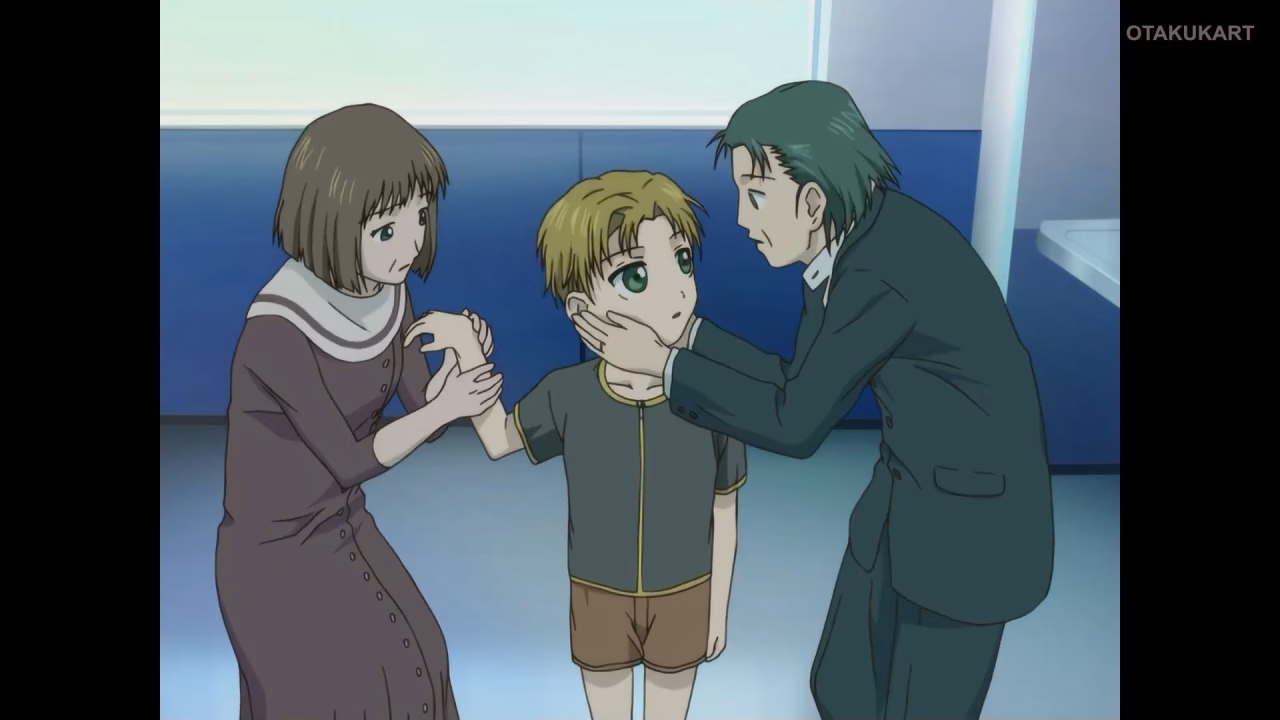
The premise of Hotori is straightforward but emotionally layered. Suzu is an android being implanted with the memories of a deceased boy so he can replace him in a grieving family. On the other side, Hotori, the daughter of the scientist leading the project, is slowly losing her own memories due to a degenerative condition.
This contrast forms the emotional backbone of the OVA. One character is gaining a life built on artificial memories, while the other is losing the very experiences that define her identity. Their friendship develops naturally through shared vulnerability, making their interactions feel genuine rather than forced.
The story does not rely on dramatic twists or heavy exposition. Instead, it focuses on small moments that gradually build emotional weight. This restrained approach allows the narrative to feel sincere, even if it means sacrificing some depth due to its short runtime.
What makes Hotori stand out is how relevant its themes feel in a modern context. The idea of an android shaped by borrowed memories raises questions about what truly defines a person. Is identity tied to experience, emotion, or something deeper that cannot be replicated?
At the same time, Hotori’s memory loss reflects the fragility of human identity. As her memories fade, so does her sense of self, creating a powerful contrast with Suzu’s artificial existence. The OVA does not provide clear answers, which ultimately strengthens its impact by encouraging reflection.
This balance between science fiction and emotional storytelling is where the anime excels. It avoids becoming overly technical, instead focusing on how these ideas affect its characters on a personal level. That choice makes the story more accessible while still being thought-provoking.
Visuals, Direction, and Blu-ray Upgrade
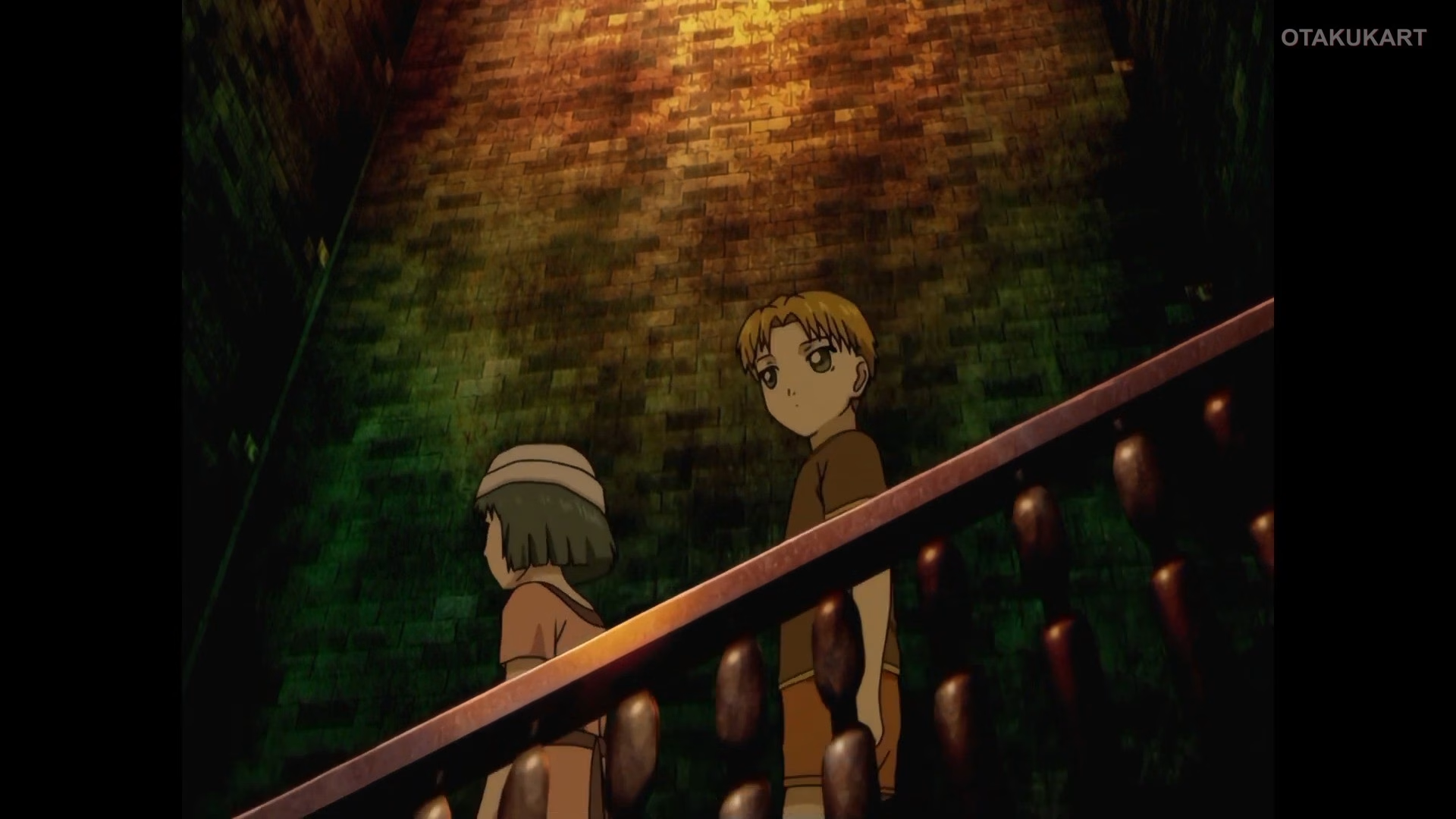
From a production standpoint, the animation by Sunrise reflects its early 2000s origins but remains effective due to its simplicity. The visuals prioritize character expressions and atmosphere over flashy sequences, which aligns well with the tone of the story.
Director Takashi Anno uses minimalism to his advantage, allowing quiet scenes to carry emotional weight. The pacing may feel slow to some viewers, but it complements the introspective nature of the narrative.
The upcoming Blu-ray release enhances the experience with an HD restoration, improving clarity while maintaining the original look. The addition of an English dub is another major advantage, making the OVA more accessible to international audiences for the first time.
Hotori: Simply Wishing for Hope is not a conventional anime, but that is exactly where its strength lies. It tells a deeply human story through a sci-fi lens, focusing on memory, identity, and connection rather than action or spectacle. While its short runtime limits how much it can explore, it still delivers a meaningful and emotionally resonant experience.
With its June 9 Blu-ray release finally bringing it to English audiences, Hotori has the opportunity to reach viewers who may have otherwise missed it. For those willing to engage with its quiet storytelling, it offers a reflective and memorable journey that lingers long after it ends.