Pet owners often wonder what their furry friends are staring at when they fix their gaze into corners or bark at thin air. Good Boy, directed by an emerging voice in indie horror, takes that everyday curiosity to its chilling extreme.
The film reimagines a haunting through the innocent yet perceptive eyes of Indy, a sweet and loyal dog who senses evil long before his owner even realizes something is wrong.
At its core, Good Boy is a blend of homebound anxiety, atmospheric horror, and heartfelt storytelling. It’s part haunted house thriller and part emotional drama about the connection between man and animal.
Clocking in at a brisk runtime, it wastes no time pulling viewers into the eerie quiet of an abandoned family home. Using perspective, silence, and a devoted canine protagonist, it crafts something more intimate than most horror films dare attempt.
Also read: Demon Slayer: Infinity Castle Surpasses One Piece Red in Japan’s Box Office
Think of it as Skinamarink meets The Secret Life of Pets, but with a ghost story that feels surprisingly human.
The Story Behind the Barks and Shadows
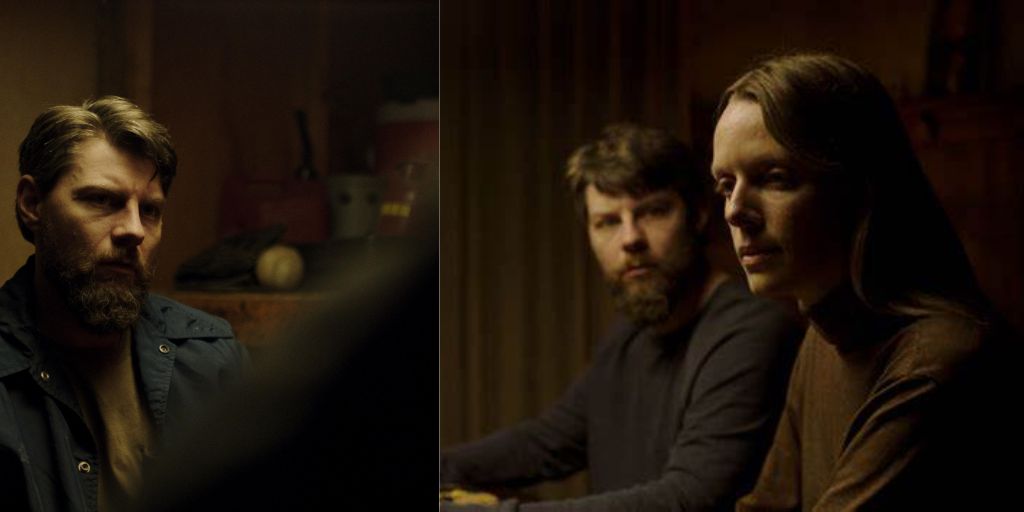
The film begins with Todd (played by Shane Jensen), a quiet city man who returns to his decaying family estate seeking solitude after a health scare. His sister, Vera (Arielle Friedman), calls often, urging him to come back to normal life, but Todd insists on staying.
He’s accompanied by Indy, his faithful dog and constant companion. The film wastes no time in giving Indy full narrative presence. We see the story, quite literally, through the dog’s sensory perspective; his focus on sounds, smells, shadows, and movements drives the tension more effectively than any dialogue.
At first, life in the empty manor seems calm. Todd repairs broken furniture, cooks simple meals, and occasionally paints. Yet Indy’s behavior begins to change.
The loyal dog refuses to enter certain rooms, whimpers at corners, and paces restlessly near cracked doorways. Anyone who’s ever locked eyes with their pet during an odd bark at nothing will find this deeply unsettling.
Slowly, we realize Indy isn’t just acting strangely; he’s warning us. There’s something in the house beyond Todd’s comprehension, a supernatural presence lurking in flickering lights and fading reflections.
As the haunting grows stronger, Todd grows weaker, and Indy’s frantic efforts to protect his owner form the emotional core of the narrative.
Watching Indy respond to auditory and visual cues only he understands makes for a thrilling cinematic experiment. The director fully commits to the premise, structuring camerawork and sound around the dog’s sensory world.
Blurry close-ups, heightened breathing sounds, and distorted light create a distinct viewing experience that feels both claustrophobic and heartbreakingly intimate.
Meet Indy: The Soul of the Story
It’s difficult to overstate how much Good Boy benefits from Indy, the dog who anchors the film. Without saying a single word, he conveys emotion richer than most dialogue-driven leads.
His fear, curiosity, and devotion create a deeper emotional link than one might expect in a supernatural story. Every rustle or low growl hints at unseen danger, and every moment of hesitation feels like love battling instinct.

Indy’s quiet presence keeps the film grounded. When Todd begins to physically and emotionally unravel, Indy remains his anchor, signaling audiences when to fear and when to hope.
The decision to never fully show Todd’s face enhances this dynamic; the human figure becomes secondary, symbolic of a broader idea: that animals can perceive and feel things human eyes simply cannot.
The performance by the canine actor (and the patience of the trainers) deserves special recognition. His subtle reactions guide the story’s emotional rhythm. Without him, the film would risk becoming a stylistic gimmick. With him, it becomes a study of empathy beyond language.
A Haunted House That Breathes Emotion
Visually, Good Boy finds strength in simplicity. The haunted house, with its rotting wood, flickering bulbs, and muted color palette, exudes stillness. Each frame feels as though it was captured at midnight, quiet, uncertain, and waiting.
This grounded atmosphere does more than set the mood; it highlights the emotional isolation that Todd and Indy share. Isolation becomes both the ghost’s playground and the story’s central metaphor.
When the scares come, they often start small: a creak in the dark, a sudden shift in perspective, or the subtle refraction of light that reveals a shadow beside Indy. These moments work far better than the predictable jump scares that occasionally slip through.
The most effective horror scenes rely on implication rather than spectacle, inviting audiences to fill the silence with dread.
Not everything lands perfectly, however. Human character development feels somewhat hollow beside Indy’s emotional journey. Todd’s backstory is hinted at but never fully shaped.
His health scare, guilt, and disconnection from family all register intellectually but never emotionally. A deeper human arc might have amplified the film’s climax, yet the movie’s creative limitations still give it charm and an experimental content with its focus rather than a bloated narrative trying to do too much.
Emotions Hidden Beneath the Horror
Despite its supernatural setup, Good Boy carries a surprisingly tender spirit. Between eerie visuals and ghostly tension lies a story about unconditional love.
Indy isn’t just defending Todd from a haunting; he’s protecting him from loneliness and despair. Through Indy’s eyes, danger becomes something emotional rather than physical: the fear of betrayal, loss, and helplessness.
The film’s emotional peak arrives in its final act, when the haunting escalates into chaos. Furniture flies, rooms collapse, and the camera rhythm quickens. Yet amid the visual frenzy, the emotional focus never shifts from Indy.
Watching him navigate danger and refuse to abandon his owner gives the film the heartbeat it needs. The climax may rely on familiar genre tropes, but the emotional authenticity redeems any predictability.
Even after the final confrontation resolves, the film lingers softly. Instead of relying on excessive gore or overexplained mythology, Good Boy ends on a moment of quiet connection between man and dog.
It’s haunting, yes, but also strangely comforting, like realizing the darkness in a room was never meant to harm, only to remind us of what devotion looks like.
Why Good Boy Stands Out in Modern Horror
What makes Good Boy unique isn’t its ghost story but rather its refusal to treat horror as spectacle alone. It’s a film that asks what it means to love something that cannot explain itself, and how fear changes when viewed through innocence.
Its low lighting, limited dialogue, and experimental camera work all serve that emotional goal.
The movie’s imperfections, thin human arcs, and occasional overreliance on jump scares are forgivable against its originality. It’s rare to find a horror movie that leaves you misty-eyed rather than just tense. Good Boy manages both.
It’s the kind of movie you’d expect to find on Shudder late at night, watched out of curiosity, only to leave you unexpectedly moved. More than just another haunted house story, this small, inventive film feels like a quiet conversation about loyalty and the unseen bonds that protect us.
Visible or not, every ghost in Good Boy represents something we refuse to face, and every bark from Indy reminds us that some love truly never stops watching over us.
Also read: Finn Wolfhard: Stranger Things Star Debuts Bold Buzzcut at Crunchyroll Anime Awards 2025