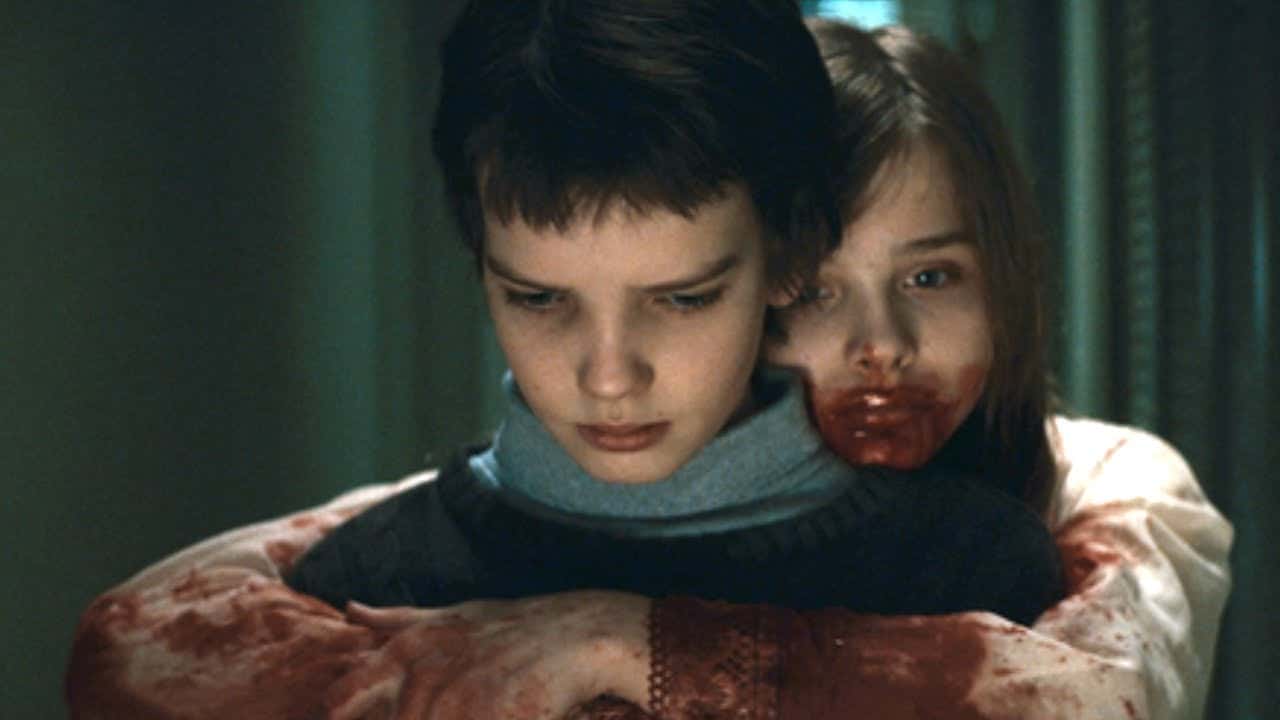
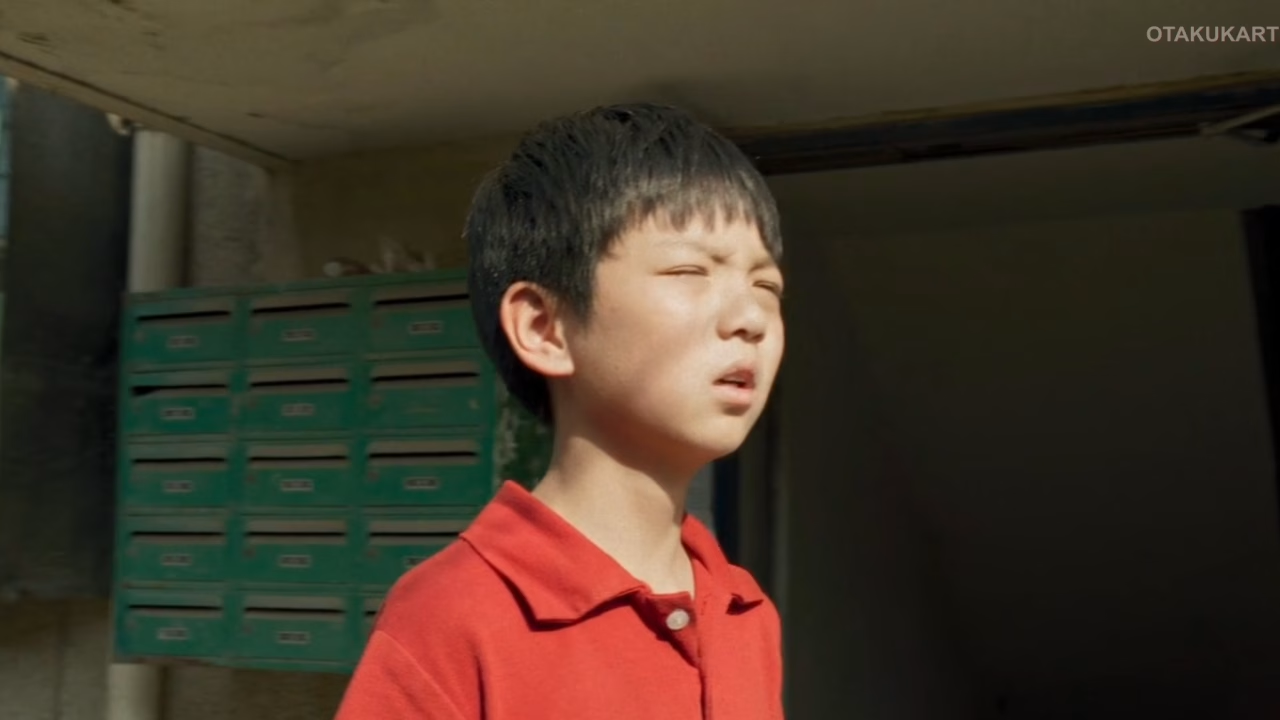
Childhood innocence and cruelty exist side by side in Pile On, the 2025 Chinese short film from director Hu Lu. Set in Tiexi District during the 1990s, the story follows 10-year-old Xiaohu, who invites his friends over while his parents attend a wedding banquet. What begins as an afternoon of games and freedom gradually turns into something far darker as the children experiment with the forbidden behaviors they associate with adulthood.
For Hu Lu, the story grew out of personal memory. “We’re all beasts trapped in a cage,” he explained in a written interview provided to OtakuKart, describing the film’s central metaphor through its children, adults, and even a praying mantis caught behind a window screen.
Although the film explores drinking, violence, cruelty, curiosity, and a tragic accident, Hu Lu emphasized that protecting the young cast was his priority during production. He transformed scenes into games, used non-alcoholic drinks, concealed certain contextual elements from the children, and ensured parents and trained professionals were present on set.
In the written interview, Hu Lu discussed how Pile On transformed a childhood experience into fiction, why he wanted to revisit 1990s Tiexi District through a child’s perspective, and how the film’s final movement reveals that children may simply be reflecting the same impulses found in the adult world.
OtakuKart: Die Luo Han (Pile On) is a game about stacking bodies until the pile collapses. When did you know that was the title, and how literally does the game appear on screen?
Hu Lu: The title Die Luo Han came to me suddenly during the synopsis stage, before I had fully developed the story. During filming, we rehearsed the human pyramid game a few times before shooting, but we did not actually pile the children on top of one another during rehearsals because it would not have been comfortable.
We did not shoot many actual stacking shots for safety reasons. To capture more natural and authentic performances, I used two cameras and tried to complete the process as quickly as possible.
There was another reason for choosing Die Luo Han as the title. In the Chinese context, “Luohan” refers to enlightened disciples of the Buddha, with figures such as the Eighteen Arhats and Five Hundred Arhats. I also wanted the title to reflect the many different faces of humanity.
OtakuKart: Your statement says the film comes from a real childhood incident that spiraled out of control. How much of what is on screen is that memory, and what did you have to invent to make it filmable?
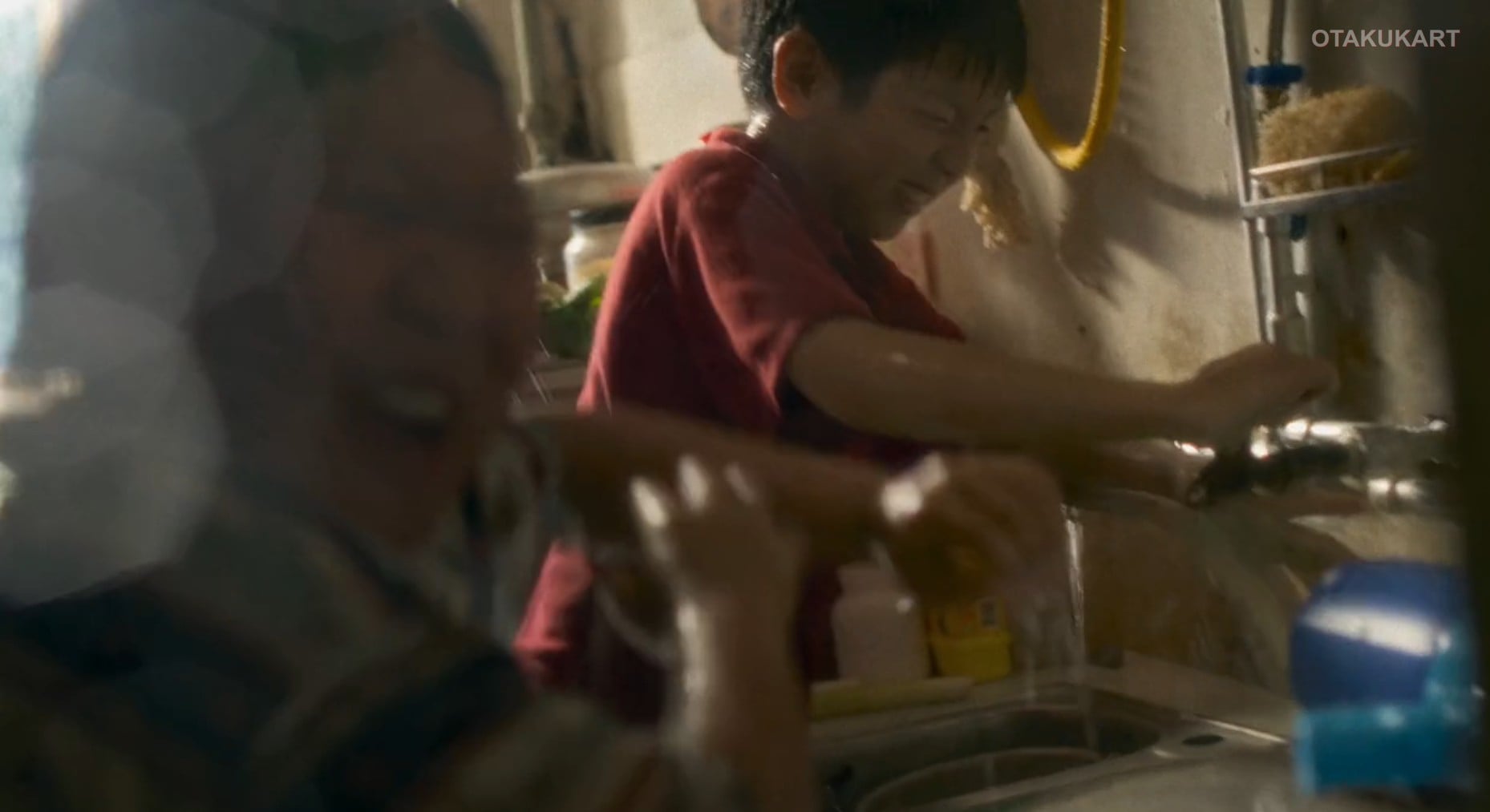
Hu Lu: In the story, the parents attending a wedding, me inviting my friends over, the roughhousing, and playing with water are all based on real experiences. The accident caused by piling children on top of one another is fictional.
When I was a child, this game was something boys often played while roughhousing. In reality, when the person at the bottom could no longer breathe, everyone would stop, so it was never as serious as what happens in the film.
OtakuKart: Tiexi District in the 1990s has been heavily explored on screen, especially through filmmakers such as Wang Bing and the broader Northeast wave. What did you feel was missing from how that era gets shown, that only a child’s-eye view could catch?
Hu Lu: I was a child during the transitional period of the 1990s, which gave me a very different perspective from someone around 20 years older than me, such as Wang Bing. In my memories, everything around me simply felt normal. There was not much difference in our material lives, and my friends and I only cared about playing happily every day.
It was only as I grew older and left my hometown that I began looking back at the growing pains of that era. Many films about my hometown feel familiar and close to me, but my work begins with my own memories. A strong physical sense of those memories pushed me to write this story.
That is a real childhood memory and a child’s perspective, but it can also be seen as a mirror of the adult world.
OtakuKart: The kids drink, swear, watch forbidden films, and the day ends in a death. Practically, how did you shoot that with actors that age? What did you tell them the scenes were about, and who was in the room protecting them?
Hu Lu: One of my principles is that the filming process must never harm children, so I used several different methods during production. The children’s work was approached more like playing games and making friends.
Before filming began, we spent several days living in the pre-arranged location. I transformed blocking related to the story into games and gradually built trust and understanding with them in the space. During those days, I often took them downstairs to play football because exercise is a great way to get to know one another.
In the story, when they secretly drink alcohol, they are actually drinking kvass soda. The film they watched was not an erotic film but the American sci-fi horror movie Alien. The background audio was added later, so the children did not know about it.
On set, professional actors, the assistant director, and each child’s parents were present to protect them. No child was injured.
OtakuKart: Wang Junting as Hu Xiaohu, what did you see in him during casting? Was he a kid who could reach something a little frightening, or one you had to keep away from it?
Hu Lu: I chose Wang Junting because he actually grew up in the same place where I lived as a child. His language, habits of thought, and way of life were similar to mine.
However, children of the 2010s are obviously very different from Hu Xiaohu in the 1990s. Teachers and parents today tend to prevent children from playing games that involve physical conflict. He had to enter a completely unfamiliar environment, so before filming, we created a simulated world in which he could become fully immersed.
I would give him clear instructions, share my own feelings with him, and help him gradually experience the character. When casting, I also focused not only on the individual actors but on the relationships between them. In this kind of children’s ensemble, the story develops more through the group as a whole than through the performance of one actor alone.
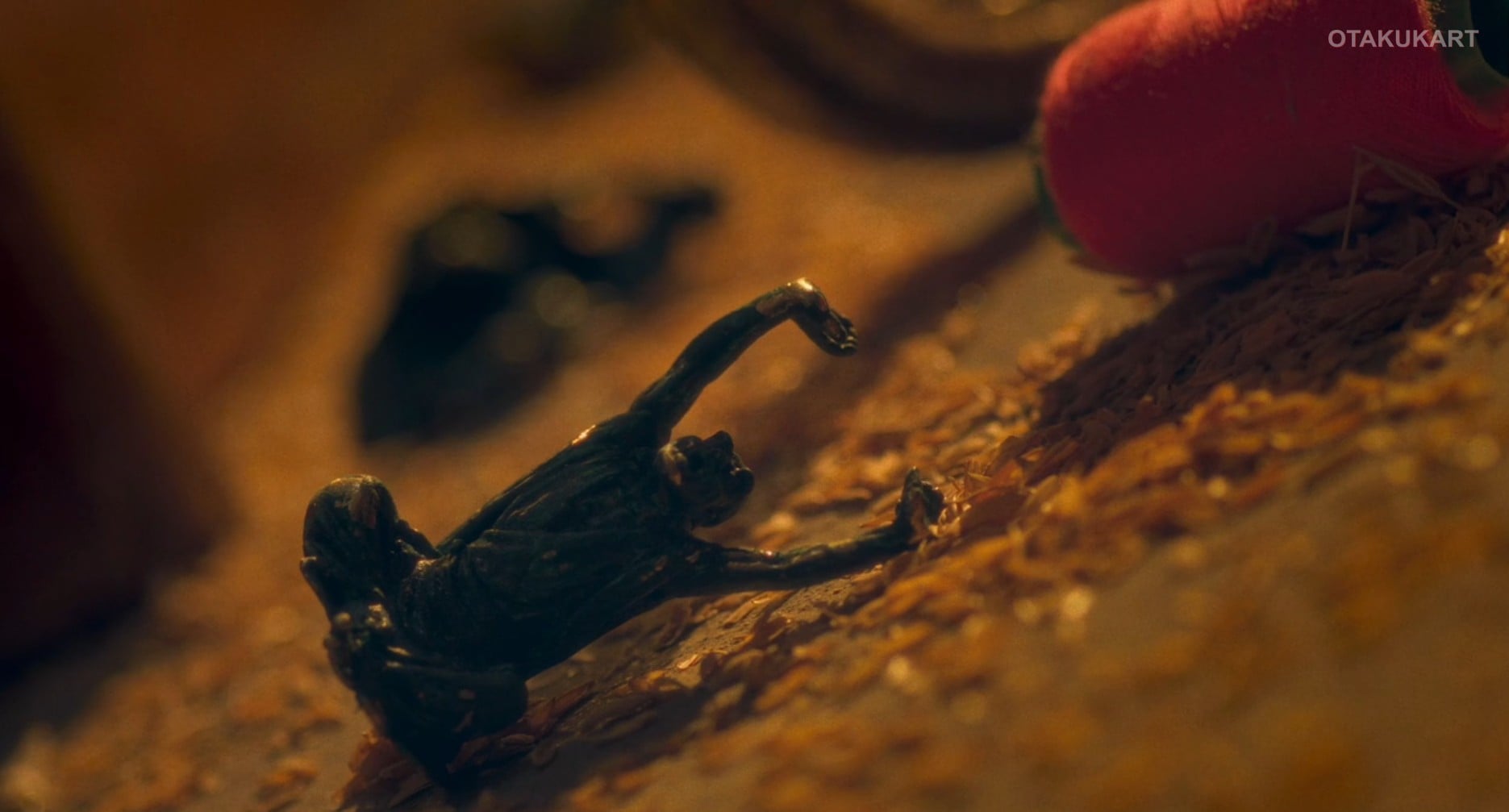
OtakuKart: The mantis is one of the film’s striking images. Your biography talks about using absurdity to explore human “animality.” Where does that footage sit in the cut, and was it in the script from the beginning or found in the edit?
Hu Lu: The praying mantis footage was something I clearly wanted to use as the opening scene from the script stage. Whether it is an insect trapped behind a window screen, children trapped inside a room, or adults trapped in that particular era, we are all beasts trapped in a cage.
OtakuKart: Guo Daming’s images are amber, sun-thick, and domestic. It looks like nostalgia even as the day turns cruel. Was that beauty a trap you set deliberately?
Hu Lu: Yes, that was a deliberate choice made before filming. Even when the story moves toward a certain kind of cruelty, the nostalgic beauty of the images remains unchanged.
In real life, even when something tragic happens to a family, the people around them, the community, and the city do not stop because of one tragic event. Life continues as it normally does. Everything still looks the same as it did yesterday.
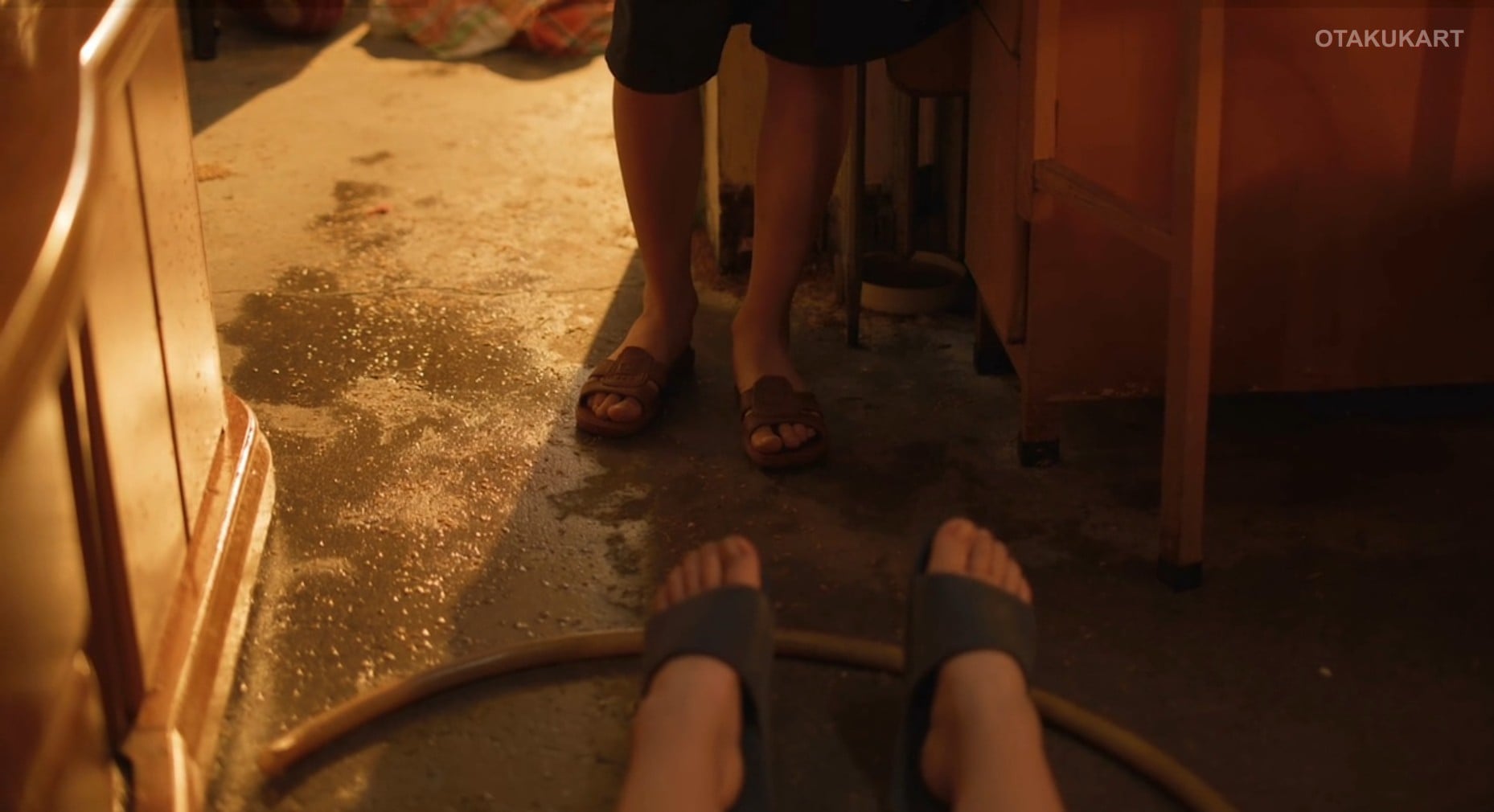
OtakuKart: The film cuts from the apartment to the wedding, revealing that the adults are running the same program. Was there ever a version that ended before that cut? Why does the film need the grown-ups on screen?
Hu Lu: When writing the script, I considered whether the protagonist’s journey should stop before he entered the adult world. In the end, I chose to follow him into adulthood in a long shot.
First, that journey symbolizes his own growth from childhood into adulthood. More importantly, we often make mistakes in life, but it is only when we see adults or other people making the same mistakes and causing disasters that we gain the perspective to reflect on ourselves.
Most people I observe still retain a certain animal nature. Only through reflection and repentance is it possible to stop. Human beings are constantly moving between animality and divinity, and I believe that is the complexity of human nature.
Pile On follows Xiaohu and his friends over a single weekend morning, but Hu Lu’s vision stretches far beyond childhood mischief. By placing the children’s curiosity, violence, desire, and eventual tragedy alongside the behavior of adults, the film turns a childhood memory into a reflection of the world surrounding it. The children may be trying to enter adulthood, but by the time Xiaohu reaches the wedding, he discovers that the adult world may not be as different from his own as he once believed.
Director Hu Lu’s Pile On was released as a 30-minute Chinese short film and previously won the Best Live Action Short Film award at the 2025 Golden Horse Awards. The film is set in 1990s Shenyang and centers on childhood, human instinct, and the uncomfortable similarities between the innocence of children and the impulses that adults carry with them throughout life.