Russell Crowe and Michael Shannon pushed hard against the planned schedule for their big courtroom face-off in Nuremberg. The scene, packed with about 20 pages of sharp dialogue between Crowe’s Hermann Göring and Shannon’s Robert H. Jackson, got slotted for three or four days with multiple cameras.
Crowe later shared in an interview how he and Shannon, who worked together before on Man of Steel, spotted no natural breaks in the script. They pitched director James Vanderbilt on blasting through it all in a single day, turning what could have been a grind into a high-stakes blitz.
Vanderbilt remembered the back-and-forth as a real debate on set. Producers flagged the page count as too much for one day, but the actors held firm. Shannon pointed out the thrill of going in raw, without over-rehearsing, to keep each other guessing and capture live tension.
Crowe joked about their Superman-level stamina from past roles, easing the pushback into action. The result ramped up the pressure, but these pros turned it into fuel for raw power.
Also read: A Celestial Gift: Stray Kids’ Han Reveals Surprise Self-Written Track “Raining Stars”
The crew set up four cameras in the static courtroom setup, true to the real Nuremberg layout, where prosecutors stayed put. No walking around for dramatic flair; just locked positions and relentless delivery.
Extras in the scene burst into applause after the first full run, stunned by the seamless flow. That energy carried through, making the day one for the books.
Uncut Takes Push Boundaries
Those 25-minute takes without a single cut demanded perfection from start to finish. Vanderbilt pulled directly from actual Nuremberg transcripts, so every line had to match history spot-on. One slip-up meant restarting the marathon, blending acting chops with memorization under fire.
The director admitted he’d never tried anything close before and probably won’t again, calling the whole push remarkable.
Crowe prepped deep for Göring, Hitler’s top deputy known for charm masking ruthlessness. He visited sites in Germany tied to the Nazi’s early life, getting into the headspace despite its darkness.
Shannon brought his intense style to Jackson, the U.S. Supreme Court justice turned chief prosecutor, facing off against Nazi denial and deflection. Their duel played like a philosophical fistfight, weapons swapped for words on guilt, power, and justice.

Technical hurdles piled on. Lighting and framing had to hold steady across the full length, with no room for resets. Yet the actors stayed word-perfect take after take, feeding off the courtroom buzz.
Vanderbilt praised it as a masterclass, with the two stars elevating a history lesson into pulse-pounding cinema. Fans of long-take magic in films like 1917 or Birdman get a historical twist here, raw and unfiltered.
Why This Scene Hits Different
Nuremberg frames the post-WWII trials through psychologist Douglas Kelley, played by Rami Malek, who sizes up Nazi minds for trial fitness. His cat-and-mouse with Göring anchors the story, inspired by Jack El-Hai’s book The Nazi and the Psychiatrist.
The courtroom peak ties it all together, showing Allies like Jackson forcing accountability for Holocaust horrors amid clever Nazi pushback.
Crowe stuck with the project through funding ups and downs, drawn to Göring’s mix of showman flair and evil smarts. An amateur magician himself, Göring needed that charisma to draw out secrets. Shannon Jackson stands unyieldingly, embodying the prosecutor’s real drive to redefine war crimes.
Their one-day magic not only nailed the script but also captured why these trials still echo: evil’s face isn’t always monstrous; sometimes it’s magnetic.
The film hit theaters in November 2025, drawing Oscar buzz for Crowe and Malek. Early reviews note its thriller pace on heavy ground, much like JFK or Apollo 13.
Making that scene in one go amps its cred, proving star power can bend production rules for something electric. As Vanderbilt put it, the actors made history feel immediate and alive.
Legacy of a Daring Shoot
This courtroom feat stands out in a movie packed with heavy hitters like Richard E. Grant and John Slattery. Vanderbilt built Nuremberg as a gripper first, history second, letting emotional hooks pull viewers through the grim facts. The long takes mirror the trials’ marathon feel, with no edits to soften the confrontation.
Crowe called the day among his most thrilling on any set, resonant with career highs. Shannon thrived on the unpredictability, letting instincts clash in real time. Their prior chemistry helped, but raw commitment sealed it. For filmmakers, it’s a blueprint for bold risks with top talent.
Nuremberg lands now as political echoes linger, reminding us how justice wrestles slippery minds. That 25-minute slice, born from actor grit and director trust, cements the film’s punch. Viewers walk away rethinking evil’s pull, thanks to one unforgettable day’s work.
Also read: MTV Axes 5 Music Channels After 44 Years, End of Video Star Era Hits Hard
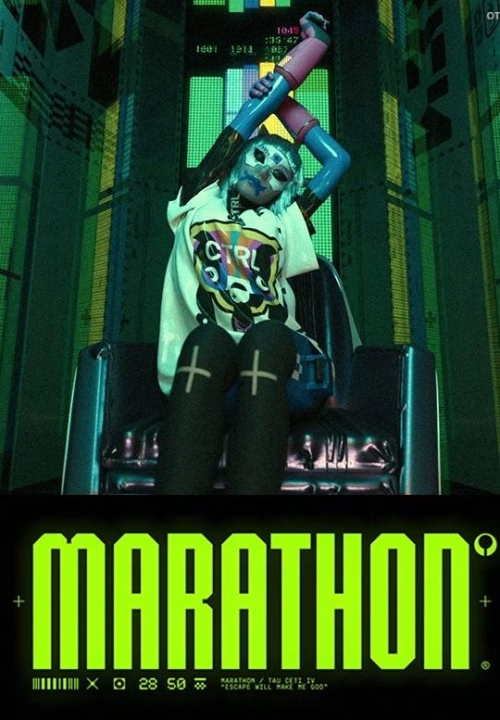
| Release Date | March 5, 2026 |
|---|---|
| Platforms | PlayStation 5; Xbox Series X/S; PC |
| Developer | Bungie |
| Director | Joe Ziegler |