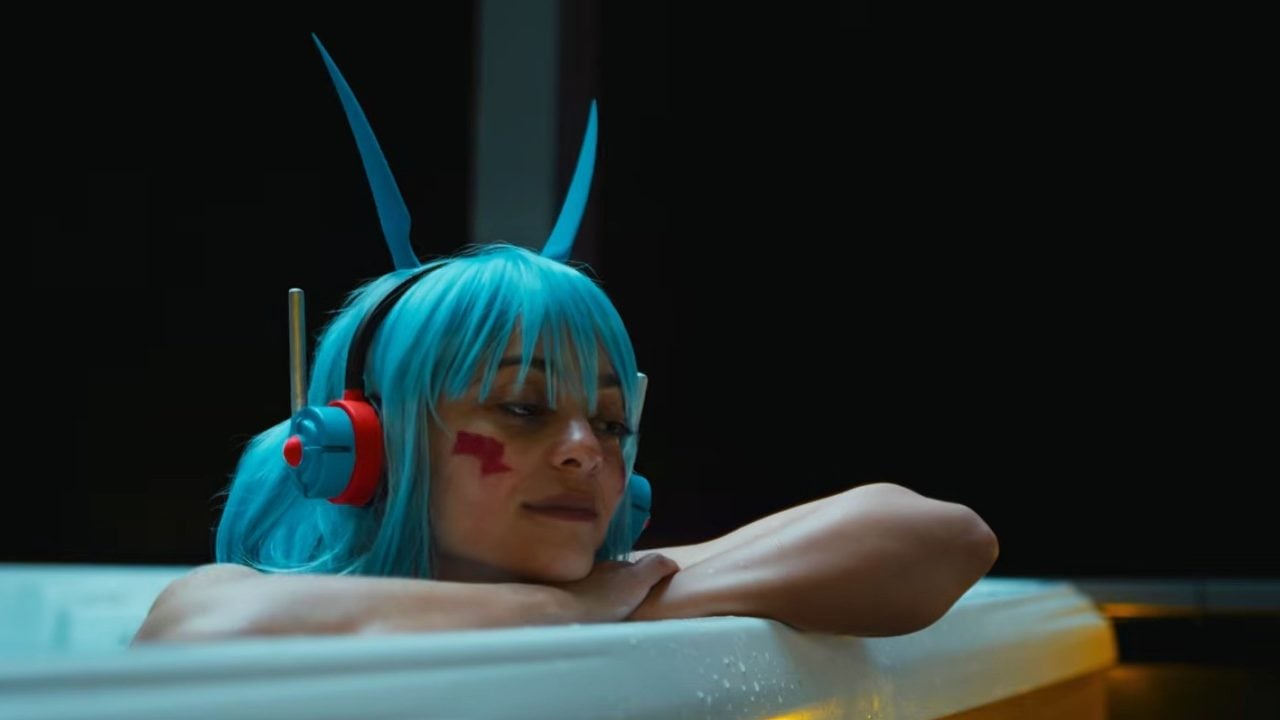
Released in theaters on October 2, 2026, Appofeniacs is the kind of horror movie that becomes increasingly uncomfortable because its central nightmare feels less fictional than it should. Written and directed by Chris Marrs Piliero, the film explores deepfakes, online manipulation, paranoia, and the dangerous human tendency to believe what appears on a screen.
The 89-minute R-rated thriller follows several seemingly unrelated characters whose lives become connected through a reckless deepfake scheme. Aaron Holliday plays Duke, a man who discovers how easily artificial intelligence can be used to manipulate people and decides to weaponize that power against anyone who annoys him. The result is a chain reaction involving jealousy, revenge, internet outrage, violence, and some wonderfully unpredictable consequences.
What makes Appofeniacs work is that it does not treat its premise like a straightforward technological horror story. Instead, Piliero turns deepfake technology into the spark for an increasingly chaotic collection of human disasters.
Appofeniacs Makes Deepfakes Feel Dangerously Personal
The film’s strongest idea is also its simplest. A convincing fake video does not need to be real to cause real damage.
Duke understands this immediately. He creates manipulated videos targeting people who have crossed him, and the consequences quickly become much more serious than his petty motivations suggest. One storyline follows James, who reacts violently after seeing a fake video involving his girlfriend and friend, while other characters become victims of fabricated footage designed to destroy their reputations or make them targets.
This gives Appofeniacs a particularly effective approach to its AI commentary. Rather than focusing on futuristic machines taking over society, the movie asks what happens when ordinary people receive powerful technology and use it irresponsibly.
That idea also comes directly from Piliero’s original motivation for making the film. In a director’s statement, he explained that seeing a deepfake in 2018 made him think the technology was impressive but would inevitably be used maliciously. He eventually developed the film around the more grounded consequences of that possibility.
The result is exaggerated, but the anxiety underneath it feels remarkably current.
The Interconnected Stories Keep the Movie Unpredictable
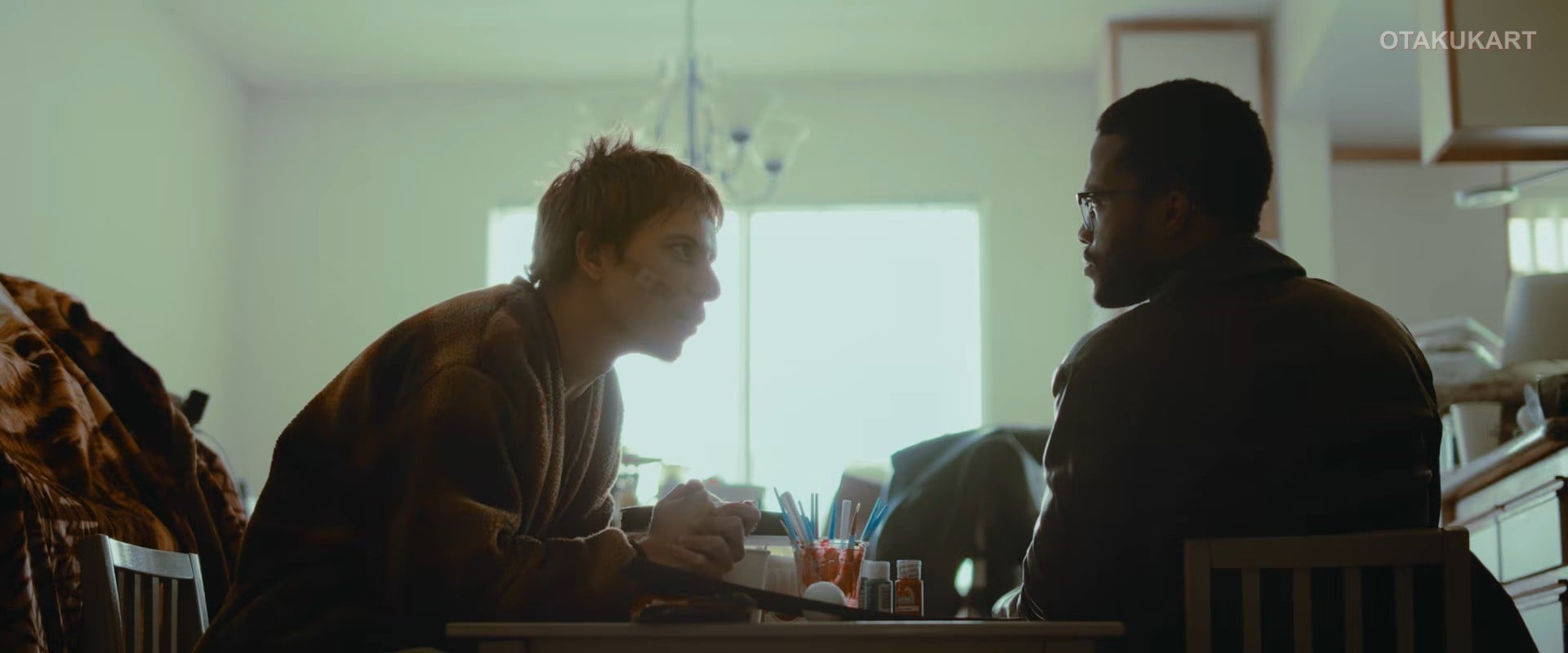
The anthology-like structure is another major strength. Appofeniacs moves between different groups of characters before gradually revealing how their stories overlap.
Sean Gunn’s Clinto Binto, Paige Searcy’s Lazzy, Simran Jehani’s Poppy, and Jermaine Fowler’s Cedrick all become important pieces of the increasingly chaotic narrative. Michael Abbott Jr. also appears as Banks, while Will Brandt plays Texas Tim.
The shifting structure means the movie constantly introduces situations that seem disconnected before finding surprising ways to connect them. Some transitions are deliberately messy, but that instability suits the story because the characters themselves are struggling to understand what is real.
The film also has a clear appreciation for crime movies and dark comedy. Its nonlinear storytelling and sudden connections give the movie a pulpy energy, while its increasingly outrageous violence pushes it firmly into genre territory.
Appofeniacs Is at Its Best When It Gets Completely Unhinged
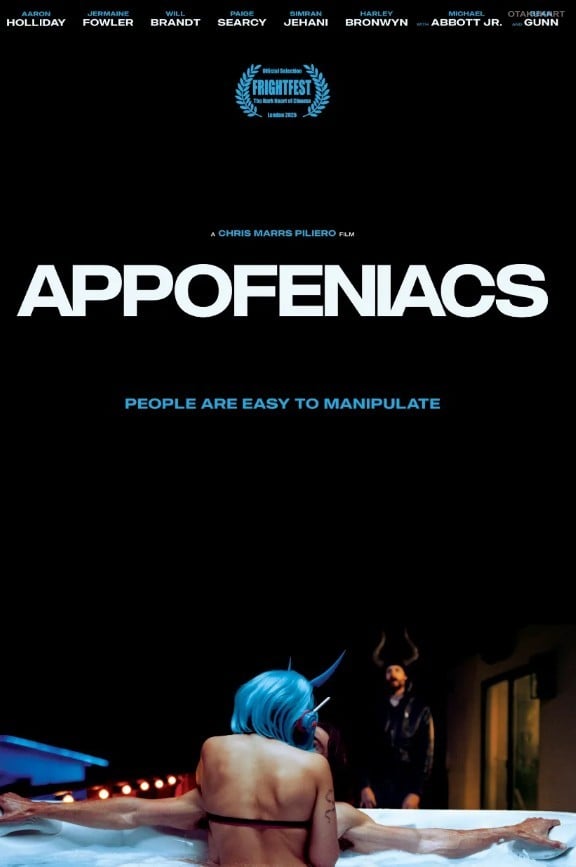
The biggest reason I enjoyed Appofeniacs is that it does not become trapped by its own social commentary. The movie has something serious to say about AI and deepfakes, but it is equally interested in making the audience uncomfortable, laugh at terrible situations, and wonder just how badly everything can go.
The violence gradually becomes more extreme, particularly as the separate storylines collide. Objects and seemingly insignificant details introduced earlier can eventually become important, giving the film a satisfying sense of payoff.
The performances also help sell the movie’s heightened tone. Holliday’s Duke is intentionally frustrating and reckless, while Gunn brings an eccentric energy to Clinto. Fowler provides another layer of unpredictability as Cedrick enters the increasingly unstable situation.
Not every storyline receives the same amount of development, and the structure can occasionally feel scattered. However, the deliberate chaos ultimately fits the movie’s central idea. When reality itself can be manipulated with a few clicks, Appofeniacs feels appropriate when its narrative refuses to move in a straight line.
Appofeniacs is not a subtle warning about artificial intelligence, nor does it attempt to provide an exhaustive examination of deepfake technology. Instead, Chris Marrs Piliero uses the subject as the foundation for a violent, strange, and frequently funny thriller about paranoia and human behavior.
The film’s biggest success is making its technology feel secondary to the people using it. Deepfakes are dangerous because people believe them, react to them, and sometimes act on them before questioning what they have seen.
That makes Appofeniacs an entertaining horror movie with a genuinely relevant idea underneath its bloody exterior. Its messy structure may not work for everyone, but the memorable characters, escalating violence, dark humor, and timely premise make it an easy recommendation for viewers who enjoy unconventional horror.
The Good
- Strong and timely premise involving AI and deepfake manipulation
- Entertaining interconnected storyline with unexpected connections
- Energetic performances from the ensemble cast
- Creative and frequently outrageous horror sequences
- Balances social commentary with dark comedy
The Bad
- Some storylines feel less developed than others
- The fragmented structure can occasionally become confusing
- Its commentary on AI is more entertaining than deeply explored